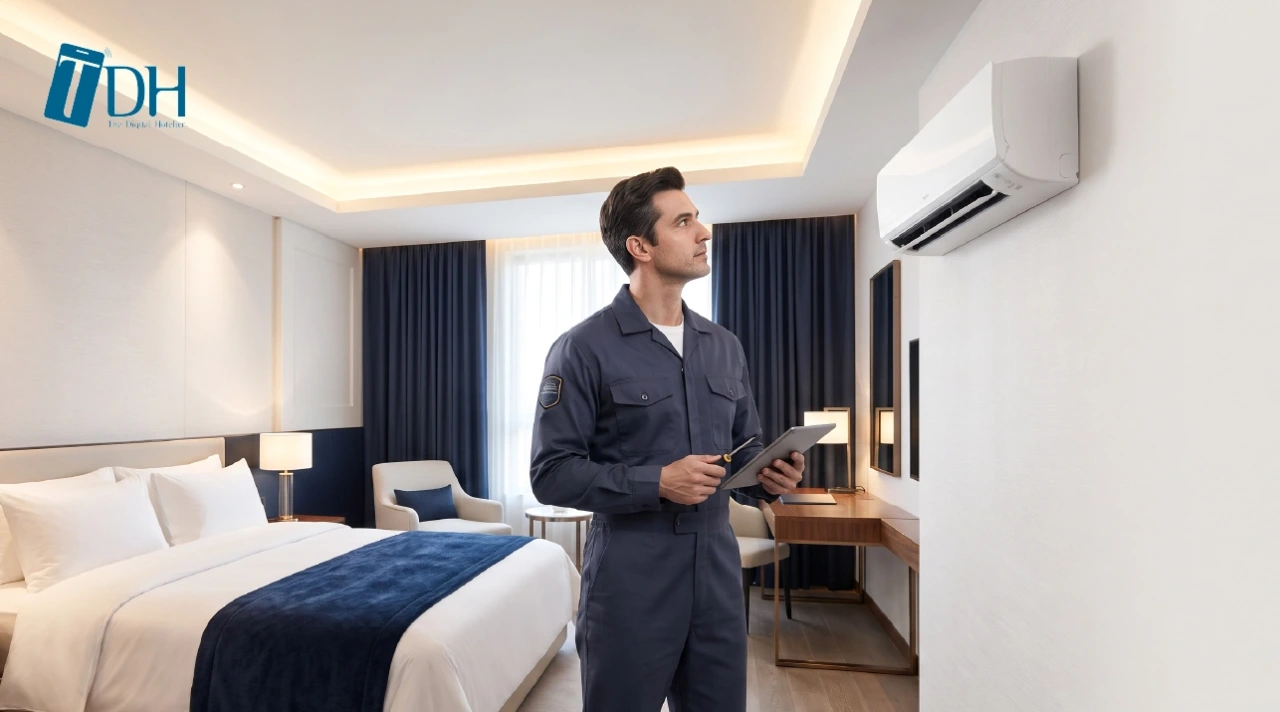



Do you remember the last time you handled an irate guest because the A/C failed on a 40°C night?
It’s more than just a repair bill. It’s the room discount, the emergency labor at weekend rates, the rush-shipped compressor part, and that permanent one-star review on TripAdvisor sitting at the top of your listing for the next six months.
We invest in luxury finishes, seamless check-ins, and staff training. But none of that matters to a guest who spent the night in a 32°C room or got stuck in your elevator for 20 minutes.
In hospitality, the technical experience is the guest experience. When equipment fails, the brand fails with it.
The question isn’t whether you can afford Preventive Maintenance. It’s whether you can afford the compounding cost of ignoring it, in emergency repairs, lost revenue, and reputation damage you can’t fully undo.
What Preventive Maintenance Actually Is
Preventive maintenance is scheduled servicing carried out before equipment fails, rather than repair after something has already failed. The distinctions between preventive, corrective, reactive and condition-based work, and where each one applies in a hotel, are covered in our guide to hotel preventive maintenance.
On the systems that matter, skipping it doesn’t save money. It moves the cost to a moment when it arrives without warning.
According to the U.S. Department of Energy’s Federal Energy Management Program (DOE FEMP), a functioning preventive maintenance program cuts maintenance costs by an estimated 12 to 18 percent on average, and properties running purely reactive maintenance can save considerably more than that. The gap comes from emergency labor premiums, rush-shipped parts, and the secondary damage that builds up when a small fault goes undetected.
| Preventive Maintenance | Reactive Maintenance |
| Scheduled inspections, predictable costs | Emergency callouts, premium labor rates |
| Parts ordered in advance at standard cost | Rush shipping on critical components |
| Managed during low-occupancy windows | Failures can land during peak occupancy, and rooms go OOO |
| Documented history enables trend analysis | Patterns are harder to see when reactive work isn’t logged consistently |
| Lower risk of the failure reaching a guest | Higher risk the failure reaches a guest before it is fixed |
Why It Matters: Four Areas Where PM Directly Affects Your Bottom Line
1. It Reduces Operational Chaos
Equipment failure doesn’t produce a single, contained problem. It produces a cascade.
A chiller trip at 11 p.m. means 60 guests calling the front desk, rooms going out of order, duty managers pulled into crisis management, and an engineering team working through the night at overtime rates.
Your staff who should be delivering hospitality are apologizing for the infrastructure.
PM stops many of those cascades before they start. Issues are resolved during planned service windows, not during check-in on a Friday night, which is why the preventive maintenance checklist matters as much as the intent behind it.
2. It Protects Your Capital Investment
Major assets such as chillers, elevators and central plant equipment can be expensive to replace, with costs varying widely by size, region and specification.
| Asset | Illustrative Replacement Cost |
| Commercial HVAC chiller | $150,000 – $400,000 |
| Passenger elevator | $250,000+ to modernize; full replacement can cost more |
Illustrative figures to show scale. Actual costs vary widely by asset size, specification and market.
Regular servicing, including lubrication, filter replacement, calibration and seal inspection, can extend the operational life of major hotel assets.
That is more than a maintenance saving. It can defer capital expenditure. If PM extends a chiller’s life from 15 to 20 years at an illustrative $250,000 replacement cost, that is five more years before that replacement may be needed, before accounting for the emergency repairs it may also prevent.
3. It Keeps You Legally and Financially Protected
Hotels operate under strict regulatory obligations across four areas:
- Fire safety: inspection and suppression system certification
- Elevators: mandatory periodic inspections with documented records
- Health & food safety: kitchen equipment and water quality standards
- Insurance conditions: undocumented maintenance gaps can complicate or weaken a claim, depending on the policy
A missed cycle doesn’t just risk a breakdown. It creates a compliance gap that can mean regulatory notices, forced closures, or a disputed insurance claim at the worst possible moment.
A documented PM program with time-stamped records is your first line of defense in any audit or dispute.
4. It Protects Your Reputation Where It’s Most Visible
The J.D. Power 2025 North America Hotel Guest Satisfaction Index Study puts a number on what a single bad stay costs. Across all stays evaluated, 12 percent involved a problem of some kind. When one occurred, guest satisfaction fell 217 points on a 1,000-point scale, from 677 to 460.
The study measures problems of any kind rather than equipment failures specifically, but it shows how hard one thing going wrong hits a stay. A failed air conditioner on a hot night is that kind of problem, and unlike an odd smell or a noisy corridor, it is largely preventable. If that guest leaves a review, it sits directly under your property name on Google and Booking.com, visible to every guest considering a booking.
PM doesn’t guarantee five-star reviews. But it reduces one specific, preventable category of failure, and in a market where OTA search rankings take review scores into account, that’s a direct revenue protection play.
The Numbers: What Poor Maintenance Actually Costs
The financial case for PM becomes clearest when you look at what reactive maintenance actually costs across its full impact, not just the repair invoice.
| Cost Category | Reactive Baseline | With the Active PM Program |
| Emergency labor | Premium rates for after-hours callouts | Lower, as more work shifts into scheduled windows |
| Energy | Misses potential energy-bill savings from targeted O&M (DOE estimate: 5-20%) | Better chance of holding designed efficiency |
| Room OOO revenue | ADR × lost nights + OTA ranking drop | Fewer preventable failures reaching occupied rooms |
| Asset CapEx | Early replacement at full cost | Lifespan extended through regular servicing |
| Regulatory exposure | Undocumented gaps = claim risk | Time-stamped audit trail on every task |
Across these categories the combined annual benefit is substantial, and the exact figure depends on your room count, occupancy, ADR and current maintenance spend.
Why Most Hotels Underinvest in PM, And Why That’s Changing
If the case for PM is this clear, why do so many properties still operate reactively?
Two reasons.
The first is administrative complexity.
Running PM across a large property means tracking service intervals for 500+ assets, assigning tasks to the right technicians, verifying completion, maintaining audit-ready records, and identifying patterns in recurring faults, simultaneously, every day.
At that scale, a spreadsheet or a binder of paper checklists becomes hard to keep reliable, which is why choosing the right PM software ends up being an operational decision rather than an IT one.
The second is how maintenance budgets get framed.
PM costs appear on the expense line every month. The failures it prevents are invisible. It is psychologically easier to cut a scheduled maintenance budget than to cut spending on something that has already broken, which is precisely why properties running lean maintenance budgets tend to face disproportionate emergency costs down the line.
What’s changed is the tooling.
When PM schedules are generated automatically, tasks are assigned and tracked digitally, and completion is time-stamped and logged in real time, the tracking no longer depends on someone remembering to do it. Management gets the visibility to know the work is actually being done, without the administrative burden that made it unsustainable before.
Automating PM with TeamStream+ and OptemAi
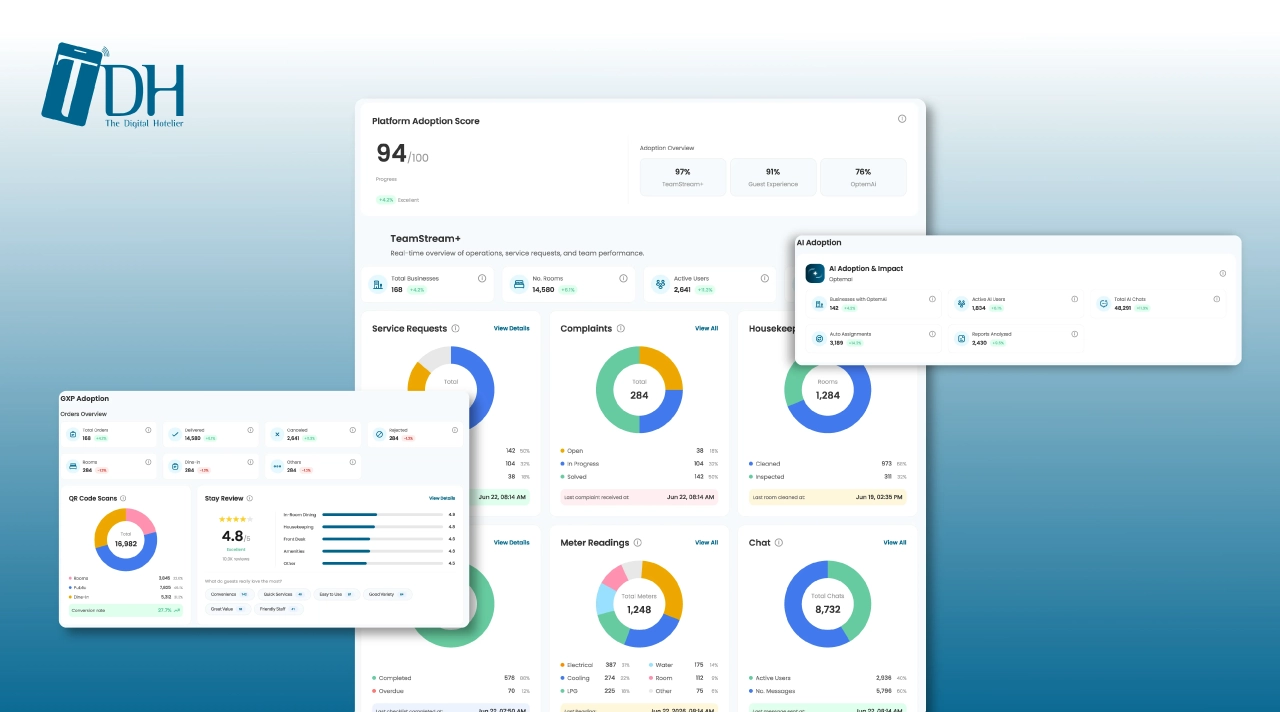
TeamStream+ gives management complete control over every PM checklist across the property through its hotel maintenance software, built specifically for hotel operations rather than adapted from generic facility software.
Full Checklist Control
Every PM checklist is structured, assigned, and automated from a single platform:
- Mandatory PM Audits: critical inspections are scheduled, assigned and tracked, so a missed round stays visible
- Recurring Scheduling: define assignees and repeat cycles (daily, weekly, or custom) once; the system generates each round automatically, and you adjust the frequency as the data comes in
- Standardized SOPs: procedures are embedded directly into each task, so execution is consistent regardless of who’s on shift
- Time-Stamped Audit Trails: every completed task is logged with its time and owner, with photo attachments where the task calls for them, replacing paper logs with a durable record
- Real-Time Dashboard: completion rates tracked instantly, so management sees what’s done, what’s overdue, and where to intervene
OptemAi: Your AI Layer on Top of All of It
OptemAi is an AI agent built into TeamStream+ with full access to your property’s operational data, every checklist, every audit round, and every reported issue.
Instead of reviewing stacked reports manually, you ask directly:
- “What issues were flagged in guest rooms this week?”
- “Which PM checklists have the lowest completion rates?”
- “Summarize this month’s audit performance.”
OptemAi reads the data, identifies patterns, and delivers answers, giving you the visibility that used to require hours of manual review.
Frequently Asked Questions
Why is preventive maintenance important in hotels specifically?
Hotels can’t close for repairs. A 200-room property operates 24/7, 365 days a year, with guests in-house at almost all times. That means equipment failures can happen while guests are in-house, with little room to isolate the operational impact.
Reactive maintenance is especially costly in hotels because a failure can hit operations and paying guests at the same time.
Which hotel systems benefit most from preventive maintenance?
Priority goes to any system whose failure directly affects guests or creates a safety and compliance risk, such as HVAC, elevators, plumbing, fire suppression, electrical infrastructure, and guest-room technology.
In full-service properties, kitchen and laundry equipment may also carry high operational priority.
Can PM software replace my engineering team?
No. It’s a tool for your team, not a replacement for it.
The physical work of inspection, servicing and repair still requires skilled technicians. What the software ensures is that those technicians are working on the right assets at the right time, with clear procedures and documented completion, rather than reacting to breakdowns and managing paperwork.
Stop Reacting. Start Protecting.
Firefighting shouldn’t be the default on the systems that matter; over time it becomes a cost structure of its own.
Many emergency callouts, compensated stays and early asset replacements are costs that a structured PM program can reduce or avoid.
If you want to see what that looks like for your specific property, your asset inventory, your team structure, your current gaps, that’s exactly what our demo sessions are built for.
→ Book Your Demo with The Digital Hotelier Today
Sources Referenced
U.S. Department of Energy, Federal Energy Management Program (FEMP). Operations & Maintenance Best Practices Guide, Release 3.0.
J.D. Power 2025 North America Hotel Guest Satisfaction Index (NAGSI) Study
Asset replacement costs are industry estimates; individual property results will vary.