



Key Takeaways:
- The guest experiences that get retold are response moments, not recognition moments: a need met while it still mattered.
- Personalization is the industry’s default answer and the hardest one to run. Every example here works without a guest profile, a login, or stored history.
- Each example pairs the moment as the guest lives it with the operational practice that makes it repeatable.
- The pattern across all nine: information reached someone who could act on it in time.
The hotel guest experience examples worth studying are the ones guests still describe a year later: the silent towel request at 11 PM, the room that was ready at 10 AM, the pharmacy delivery at 2 AM in a city where they knew nobody.
This list collects nine of those moments and, under each one, the operational practice that produces it, so you can judge which ones your property could deliver tomorrow.
What Makes a Good Hotel Guest Experience?
A good hotel guest experience is a need met while it still matters: the request answered now, the problem that never arrived, the answer available the second it was wanted.
Guests forgive an ordinary room far more easily than an ignored request, and the stories they retell are response stories far more often than recognition stories.
Personalization deserves an honest word here, because nearly every article on this topic leads with it. The archetype is the fruit bowl story: a guest eats only the dragonfruit on the first morning, and on the second morning the bowl is all dragonfruit. It’s a lovely moment. It’s also rare, for a structural reason.
Producing it takes either an unusually stable team passing observations across shifts by hand, or systematic guest data collection with all the consent and discipline that implies. Most properties have neither, which is how personalization became the most over-promised idea in hospitality.
The examples below need none of that. No profile, no login, no history. What they need is for information to move through your operation: a need reaching the right person while it’s still a need. One more filter, because this topic drowns in lists of what every hotel already does: mobile keys, digital menus, and a welcome drink are fine, standard, and forgettable. The nine that follow are the ones most properties still get wrong.
9 Hotel Guest Experience Examples Worth Copying
Each example gives you the moment as the guest lives it, then what it takes to deliver. At a glance:
| # | The moment guests remember | What it takes |
| 1 | A stay where nothing went wrong | Faults found on routine checks, before the guest |
| 2 | Towels at 11 PM, without saying a word | A written channel that works at any hour |
| 3 | Explaining it once, and the evening shift knew | Requests that carry their own history |
| 4 | Telling the pool attendant, and it counted | Any staff member can log an issue |
| 5 | Dinner ordered in their own language | Menus and requests in the guest’s language |
| 6 | “Your room is ready” at 10 AM | Room status the desk can actually trust |
| 7 | A pharmacy delivery at 2 AM | Vetted local services, arranged by the hotel |
| 8 | “Yes, we have your watch,” in seconds | Found items logged with photo and location |
| 9 | A receptionist who had time to notice | Hours returned to the floor |
1. Proactive Hotel Maintenance: The Stay Where Nothing Went Wrong
A guest checks in on Tuesday and out on Friday, and the entire story of the stay is that there isn’t one. The shower ran hot every morning. The AC hummed and never coughed.
Not once did they stand at your front desk explaining something that should have worked, and when someone asks about the hotel later, they’ll say “honestly, everything just worked”, then book it again for exactly that reason.
An uneventful stay is not the absence of an experience; it’s one of the hardest experiences a hotel can produce.
What it takes: finding the faults before the guest does. That means routine measurement built into the day: a scheduled round that records water temperatures in rooms ahead of the evening shower rush, a checklist that catches the dripping AC unit before the room is sold, an off reading that becomes a work order while the corridor is still empty. Most hotels still meet their hot-water failure at the front desk, in a bathrobe. Every fault fixed before a guest experiences it is a five-star moment nobody had to perform, and a review that never needed managing.
2. Silent Service Requests: Extra Towels at 11 PM Without a Word
The baby finally fell asleep on the guest’s chest twenty minutes ago. They need extra towels, and everything about calling your reception is wrong: the ringing, the hold, the talking.
So they type the request from their phone, one-handed, in the dark. A few minutes later there’s the softest knock, towels at the door, and the baby never stirred.
Some of the best in-stay service happens in complete silence.
What it takes: a written channel on the guest’s own phone that works at any hour, with each request landing as a tracked task with the team that owns it. No conversation required, and nothing to install. The property-wide mechanics of running service this way are their own topic, covered in our QR-first hotel framework. What matters here is who this serves: the guests who use a channel like this are mostly the ones who would otherwise have said nothing at all.
3. Requests That Survive the Shift Change: Explained Once, Never Repeated
At breakfast, a guest mentions to your receptionist that the room safe won’t lock. They brace for the familiar ritual: repeating it at noon, re-explaining it from zero to an evening-shift stranger at 7 PM, wondering by day two whether anyone wrote anything down.
Instead, when they pass the desk that evening, a receptionist they’ve never seen asks whether the replacement safe is behaving.
A hotel with one memory feels completely different from a dozen disconnected shifts.
What it takes: the report existing as a single tracked item, with an owner, a status, and its own history, visible to whoever is on duty. Notice that none of it requires knowing anything about the guest. It only requires the hotel to remember its own work, which is rarer than it sounds: the industry keeps talking about recognizing guests across stays while most properties can’t hold onto one request across a single handover.
4. Complaints That Count Anywhere: Told to the Pool Attendant, Not Filed at the Desk
Between laps, a guest mentions to the pool attendant, half as small talk, that the shower drain in 312 is blocked. They expect a sympathetic nod and nothing more, because nothing was filed anywhere official.
By the time they’re back upstairs, maintenance has been in, and at checkout your receptionist asks if the drain behaved for the rest of the stay.
Guests don’t study your org chart. They tell whoever is nearest, and they consider the hotel informed.
What it takes: making that assumption true. Whoever hears the problem, from a housekeeper to a lifeguard, must be able to log it on the spot, so it becomes a tracked item with an owner rather than a favor that depends on someone’s memory at handover. Everything after the capture, the routing, the fix, the verification, the follow-up before checkout, is a discipline of its own; we cover it in full in service recovery in the hotel industry. The front-desk script for the moment a guest complains to your team directly is a separate piece: how to resolve guest complaints in a hotel.
5. Multilingual Guest Experience: Dinner Ordered in Their Own Language
A guest is traveling with their parents, and for once the parents order dinner themselves: reading the menu comfortably, asking about the sauce, changing their minds, adding dessert.
Nobody performs simplified tourist English. Nobody points at pictures and hopes. The meal arrives exactly as everyone imagined it, and the ordering itself, invisible to you, was part of the evening.
Guests order more, and enjoy it more, when they can order in their own language.
What it takes: menus, requests, and service descriptions in the guest’s own language on their own phone, rather than declaring language solved because the front desk speaks English. People order less when asking is work; they skip the question about the sauce, default to the safest item, or don’t bother, and that loss appears on no report because nobody sees the orders that were never placed. Mohamed Salem, Director of Front Office at Swissotel Al Murooj: “It has significantly improved our in-room dining orders as guests can now place orders in their native language.” The dignity shows up in the order volume.
6. Early Check-in Without the Gamble: “Your Room Is Ready” at 10 AM
Off a red-eye, wrinkled and running on four hours of sleep, a guest reaches your desk braced for the sentence every traveler knows: check-in is at three.
Instead they get a key. A shower, blackout curtains, and a bed at 10 AM, and a year later this is still the part of the trip they mention first.
Early check-in is not a looser policy. It’s certainty your desk finally has.
What it takes: room status the desk can trust. The usual refusal isn’t policy; it’s that nobody at the desk knows which rooms are verifiably done, because the status lives in radio calls, paper sheets, and a supervisor’s memory, so the safe answer is always no. Where housekeeping marks a room inspected and ready and the desk sees it live, the yes stops being a gamble and the refusal turns into sellable inventory. Amer Ammar, General Manager at Premier Inn Hotels, saw the same chain: “We’ve also been able to identify revenue opportunities, particularly around early check-ins.”
7. Guest Services Beyond the Property: The 2 AM Pharmacy Delivery
A child spikes a fever at 2 AM, in a city where the guest knows nobody, doesn’t speak the language, and has no idea which pharmacy is open, let alone which to trust.
They message the hotel, and the medicine arrives at the room. The worst hour of the trip becomes the story that family tells about your hotel for years.
Some of the most retold guest experiences happen outside the hotel, arranged by the hotel.
What it takes: a hotel that doesn’t end at its own walls. Most properties stop at a concierge pointing to a taxi rank, and from there the guest is gambling on a search engine in a foreign city; if the gamble goes wrong, the hotel collects the review anyway. The alternative is vetted local partners offered through the hotel itself: taxis, pharmacies, car rentals, on the same screen the guest ordered dinner from. JS Anand, Founder at LEVA Hotels: “By integrating external services like taxi bookings, car rentals, and pharmacies, we are able to offer our guests a more comprehensive experience.”
8. Lost and Found Done Right: “Yes, We Have Your Watch”
Two days after checkout, unpacking at home, the guest’s stomach drops: the watch. They call your hotel rehearsing an apology for the trouble, expecting “we’ll check and call you back” followed by days of silence.
Instead the answer comes in seconds: yes, we have it, logged Tuesday morning by housekeeping, here’s how we get it back to you. The relief is physical, and the certainty is the part they’ll describe to people.
A confident answer after checkout is a guest experience almost nobody designs.
What it takes: a photo and thirty seconds at the moment of discovery. Properties that treat lost and found as guest experience log every found item as it turns up, with a picture, the location, and the finder, as part of the cleaning routine, so the anxious call meets a certain answer instead of a search through drawers and three people’s memories. It’s one of the few moments a hotel gets to be impressive after the stay has already ended.
9. Staff With Time to Notice: The Only Personalization That Needs No Database
A returning guest checks in for the third time, and your receptionist mentions they’ve been given the quiet corner room they liked.
Down the hall, a housekeeper spots a birthday card on a desk and mentions it to the restaurant, and a dessert arrives at dinner unannounced. None of it was in any database. Someone simply had the attention to notice, and the time to act on it.
The touches guests rave about come from staff who had time to notice.
What it takes: giving that time back. These moments don’t survive contact with a team that’s drowning in radio calls, paper checklists, and the same five phone questions all day. Attention is the scarcest resource on a hotel floor, and manual coordination is what consumes it, so every routine that stops eating staff hours returns to the floor as capacity to notice things. It’s also the only personalization in this list that needs no profile and no privacy tradeoff: a person with the time to notice.
What These Hotel Guest Experience Examples Have in Common
In every example above, the difference was never generosity, gadgetry, or budget. It was that information reached someone who could act while it still mattered.
A temperature reading reached maintenance before the shower rush. A silent request reached housekeeping without a phone call. A drain complaint told to a pool attendant reached the team that owns the fix. A room’s real status reached the desk in time to say yes.
If you run a property, two questions will tell you more than any audit. Where does information die in our operation today? And who needed to know something this week but found out too late?
The answers are usually a short, uncomfortable list, and every item on it is one of these experiences you’re currently not producing. What you do with those answers day to day, across the whole stay, is the subject of our guide to hotel guest engagement.
See It on Your Property
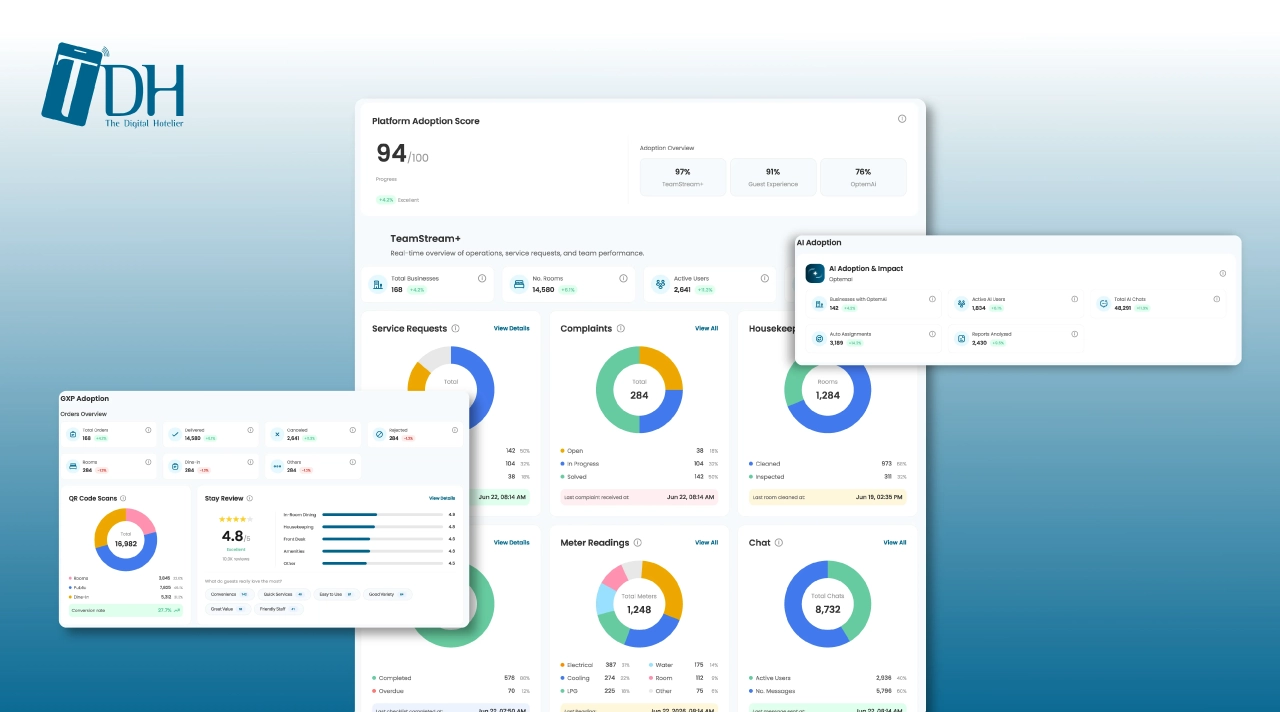
Connecting a frictionless guest experience with the operation behind it is exactly what The Digital Hotelier does. Book a demo to see it on your own property, and watch how a guest’s silent request turns instantly into a routed, tracked task for your team.
Frequently Asked Questions
What is an example of a good guest experience in a hotel?
A guest with a baby asleep on their chest needs extra towels at 11 PM, types the request from their phone, and the towels arrive with the softest knock: no call, no explaining, no follow-up. It’s small and unglamorous, and it’s exactly the kind of frictionless moment that decides how a guest describes the hotel afterward.
How can a hotel improve guest experience without collecting guest data?
By improving how fast information moves, not how much of it is stored. Every example in this article works with zero guest history: faults caught on routine checks, requests routed to the team that owns them, complaints logged by whoever hears them, room status the desk can trust. Response beats recognition, and response needs no database.
Does a better guest experience require a big budget?
No. Budget shows up in amenities; the experiences guests retell come from attention and timing. A fault fixed before the guest found it, a silent request answered in minutes, a found item logged with a photo: none of these cost meaningful money. What they require is that information moves through the hotel reliably, and that’s an operations decision, not a spending decision.