



Key Takeaways:
- More room service orders and higher average checks can increase revenue, but only if costs stay under control.
- Clear menus, upfront pricing, and simple ordering give guests fewer reasons to choose outside delivery.
- Relevant sides, drinks, and upgrades can increase order value without making the menu harder to manage.
- Faster order handling, reliable delivery, and guest feedback help hotels improve service and profitability.
A guest returns to their room after a long day, hungry and in no mood to go out again. The hotel has a restaurant, a capable kitchen, and a room service menu. Everything needed to serve that guest is already on the property.
Yet the guest orders food from an outside delivery service instead.
Maybe the menu was hard to find. Perhaps the prices or delivery time were unclear. Or ordering from somewhere else simply felt easier.
These are the sales that never appear in a room service report. You know what guests ordered, but not always what they considered ordering before giving up.
To increase room service revenue, make the menu easier to find, simplify ordering, offer relevant upgrades and additions, and deliver food reliably. The aim is to win more orders and increase average check size without eating into margins or disappointing guests.
What Drives Hotel Room Service Revenue?
Room service, or in-room dining, earns revenue from food and beverages delivered to guest rooms. Depending on the hotel’s accounting practices, that may include meals, drinks, paid additions, upgrades, and applicable service charges.
At its simplest:
Room Service Revenue = Completed Orders × Average Order Value
There are two ways to increase that number: complete more orders or raise average order value (AOV), often called the average check. The most effective approach usually pays attention to both.
There is a limit, though. Extra orders help only if the kitchen and service team can keep up. And a higher sales total means little if food, labor, waste, and delivery costs rise faster.
That is why order volume, check size, and the cost of fulfilling each order need to be considered together.
10 Ways to Increase Hotel Room Service Revenue
1. Make Room Service Easy to Find and Order
Guests should not have to call reception just to find the room service menu. It needs to be visible in the room and easy to open on a device they already use.
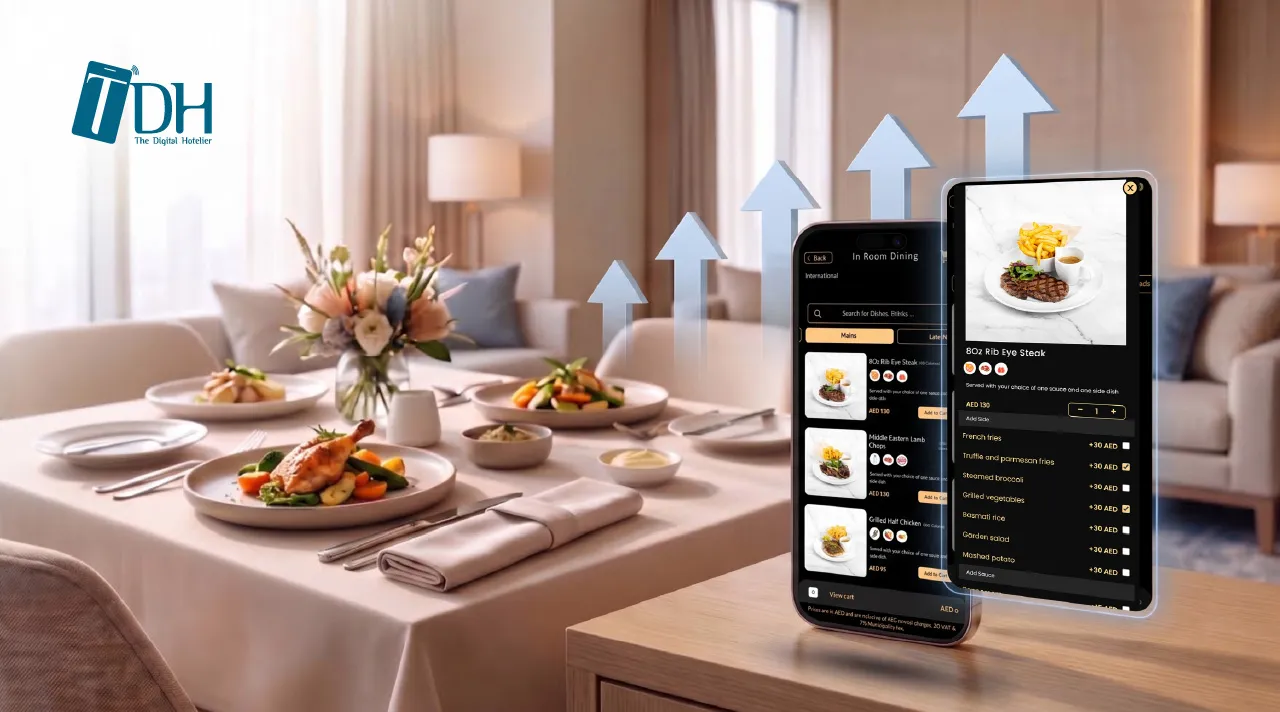
A room-specific QR code can open a digital menu directly on a guest’s phone. Operating hours, menu categories, prices, and available items should be easy to find from the first screen.
Language can be a deciding factor too. A guest might recognize a dish but hesitate to order if its ingredients, description, or available modifications are unclear.
Mohamed Salem, Director of Front Office at Swissôtel Al Murooj Dubai, described the effect of multilingual ordering at his hotel:
It has significantly improved our in-room dining orders as guests can now place orders in their native language.
A useful test is to follow the journey yourself: Can you find room service in a few seconds? Are the hours and prices clear? Can you order without asking staff for instructions?
If not, guests may be leaving before they have even explored the menu.
2. Build a Menu Around Guest Needs and Kitchen Capacity
A bigger menu is not necessarily a better one. Guests need enough choice to find a meal they want, while the kitchen needs a selection it can prepare consistently.
A business traveler might want something quick and familiar. A family may look for flexible portions. International guests may want both local dishes and well-known favorites.
In Hilton’s 2026 Trends Report, based on an Ipsos survey of more than 14,000 travelers in 14 countries, including the UAE, Saudi Arabia, and Singapore, nearly 80% said they find comfort in familiar menu items.
Instead of adding dishes endlessly, build variety into a manageable selection.
A pasta dish can come with a choice of sauce or protein. Breakfast can have different portions or sides. Main courses can offer a few sensible modifications.
Guests get options without the kitchen needing a new recipe and stock list for each one.
Presentation matters just as much. Clear categories, appealing but accurate photos, useful descriptions, portion details, allergen information, and prices make the choice easier. Labels such as Chef’s Pick or Hotel Signature can also help a tired guest decide without comparing every dish.
A 2026 study in the International Journal of Hospitality Management found that information quality in restaurant QR-code menus reduces uncertainty and decision fatigue while supporting satisfaction and behavioral intention.
The research looked at restaurant diners, not hotel room service. Still, the point is practical: a menu that answers questions makes it easier to choose.
For guests with allergies or religious dietary needs, what often matters most is whether a dish can be changed. In a 2026 study by hospitality researchers from five US universities, the ability to modify a dish was the strongest signal that a menu was inclusive, ahead of detailed dish information and food symbols, and diners without dietary restrictions showed similar preferences. Diners shown the more inclusive menu also reported stronger intentions to eat at that restaurant. Hotel menus face the same question.
Then look at what each dish contributes. A bestseller that uses expensive ingredients and takes a long time to prepare may make less money than a simpler, less popular item.
Menu engineering works best when popularity, food cost, preparation time, selling price, and ease of ordering are viewed together. Reports on top-selling dishes and peak ordering hours make that review easier to run.
3. Increase Average Order Value With Upselling and Cross-Selling
The guest has chosen a main dish. Is there a useful addition that would make the meal better?
Upselling offers a higher-value version of the original item, such as a larger portion, premium ingredient, or upgraded meal.
Cross-selling introduces complementary items, such as a side, beverage, or dessert.
Paid modifiers and other optional additions also allow guests to personalize a dish while increasing its total value.
These suggestions work best while the guest is building the order, when an addition feels like a natural part of the meal rather than a separate sales pitch.
A side alongside a main course or a second drink with breakfast is easier to consider than a long list of unrelated items.
Keep the choices limited and the extra cost obvious.
There is a difference between a worthwhile upgrade and charging for every small accompaniment. Guests can appreciate the first and resent the second.
Build better orders, not just bigger ones. Check which additions guests select, how much they contribute after costs, and whether they complicate preparation. If an option rarely sells or slows the kitchen down, it may not deserve a place on the menu.
4. Reduce Friction Throughout the Ordering Journey
Once a guest decides to order, the last thing they want is another set of steps to complete.
An app download, a new account, or a form asking for information the hotel already has can turn a simple purchase into a chore.
Baymard Institute’s cart abandonment research found that 18% of surveyed US online shoppers had abandoned a purchase because they were required to create an account.
That is an ecommerce finding, not a hotel room service abandonment rate. But it raises a fair question for hotels: does the ordering journey ask guests to do more than necessary?
The hotel needs to know the room. The guest does not need to type it.
With a room-specific QR code, the journey can be straightforward: scan, browse, customize, and confirm.
In Guest-Journey, TDH’s app-less guest experience platform, the QR code in each room already carries the room number, so guests never download an app or create an account to order.
Keep a phone or staff-assisted option available for guests who prefer it or cannot use the digital channel.
5. Make Payment Convenient and Pricing Transparent
The payment step should be as clear as the menu. Guests need to know how they can pay before they reach the end of their order.
Depending on the property, payment options may include cards, supported online methods, cash, or charging the order to the room.
The right mix depends on the property and its guests, especially when they come from different markets.
In a 2025 experiment, Stripe found that displaying at least one additional relevant payment method beyond cards increased conversion by an average of 7.4% across the businesses studied.
That result comes from online businesses, not a hotel room service trial. It is a reason to review guest payment preferences, not a forecast of how much a hotel’s orders will increase.
Add methods guests are likely to use, rather than collecting payment options for their own sake.
Just as important is the final price.
Show taxes, delivery charges, and service fees before confirmation. A surprise charge can undo the convenience that attracted the guest in the first place.
If charging the meal to the room is available, make that choice easy to recognize and consistent with the hotel’s billing process.
6. Plan Breakfast, Late-Night, and Peak-Hour Demand
A breakfast rush and a late-night order call for different menus and staffing decisions. Historical demand is a better guide than treating every hour of service the same.
Breakfast shows this most clearly. Writing for CoStar in October 2025, Silvie Cohen, senior vice president at hotel asset manager hotelAVE, noted that most breakfast room service orders arrive within a 60- to 90-minute window, and suggested an express breakfast or pre-orders to ease the pressure.
The old breakfast doorknob card is one familiar form of pre-ordering. Guests choose their meal and preferred delivery time the night before and leave the card outside the room.
It gives the kitchen some of the next morning’s demand in advance, before the rush begins.
The same planning benefit applies wherever advance breakfast orders are accepted.
Where guests order on the day, review the pattern: When do orders cluster? Which dishes take the longest? Where does delivery begin to slow down?
An express selection, a sensible preparation sequence, and accurate delivery estimates can take pressure off the busiest periods.
Late at night, consistency often matters more than variety. A smaller menu the kitchen can deliver well is better than a long one filled with unavailable dishes.
Also look at business events, group arrivals, weekends, and occupancy trends. They can change demand even when service hours stay the same.
7. Give Guests a Reason to Choose Hotel Room Service
A guest can compare the hotel’s menu with outside delivery options in seconds. Room service has to earn its place in that comparison.
The price is part of it, but guests also notice the choice of dishes, delivery time, extra charges, and how easy the order is to place.
The hotel has advantages of its own: a meal served in the privacy of the guest room, food from its kitchen, and service that fits the rest of the stay.
Restaurant specialties or well-prepared local dishes can give guests a reason to choose the hotel instead of a familiar delivery app.
Those advantages should be visible. In Guest-Journey, a promotional banner can bring in-house dining to guests’ attention while they browse other hotel services.
Mohamed Salem of Swissôtel Al Murooj Dubai, quoted earlier, also pointed to the banners:
The platform’s user-friendly interface and strategic marketing banners have further enhanced our guests’ overall experience.
A premium price also needs to feel justified. Good presentation, reliable timing, quality ingredients, and a clear final bill all matter when guests decide whether the convenience is worth it.
Try ordering from your own menu and compare the experience with local delivery alternatives. Would you understand the total cost? Know when the food will arrive? Be happy with the meal when it reaches your door?
Competing on price alone is not the only option. Making the whole experience worth paying for is often the better starting point.
8. Reduce Manual Work and Give Staff More Time to Serve
Every call to take an order, confirm a room number, or repeat a dish to the kitchen takes staff time. Digital ordering can remove some of that work.
When details arrive clearly, staff can spend that time checking orders, preparing food, and getting food to the right room rather than fixing transcription mistakes.
When Guest-Journey is connected to a compatible POS system, orders can reach the restaurant without staff entering them a second time. TDH supports integrations with multiple POS systems, depending on the hotel’s setup.
Of course, faster order entry does not fix a slow kitchen or a shortage of delivery staff.
If digital ordering saves time, put it to use where the operation needs it most: handling another order at peak hour, prepping and resetting between rushes, checking accuracy before dispatch, or giving the team room to recover so service stays consistent. Capacity is not the same as rushing.
9. Keep Food Quality and Delivery Standards Consistent
The meal is not finished when it leaves the kitchen. It is finished when it reaches the guest in good condition.
Fried dishes may lose their texture. Hot meals can cool while waiting for dispatch. Chilled desserts may be affected by delays, and carefully plated dishes can arrive looking very different from when they left the kitchen.
Test how dishes hold up during delivery, not just how they taste in the kitchen.
Before dispatch, staff should compare the meal with the order details, checking quantities, selected modifications, sides, beverages, and any special preparation instructions.
Hot and cold items also need appropriate handling, and one person or role should own the final check.
Give guests a realistic delivery estimate. If the order is running late, tell them before they have to call and ask.
Patterns in recorded complaints can reveal exactly where the process is failing. Cold food may have sat too long before dispatch. Missing sides point to checking errors. Late deliveries at the same time every day suggest a capacity problem.
Put it right for the guest first, through a clear service recovery process, then use the pattern to stop it happening again.
The first order often decides whether the guest trusts the channel enough to order again.
10. Measure Revenue, Profitability, and Guest Satisfaction Together
For an F&B manager, higher sales do not automatically mean a healthier room service operation. Look at the orders, the costs, and the experience guests actually receive.
For example, a rising average check is good news only if guests keep ordering and the additional sales cover the extra costs.
These measures offer a useful starting point:
| Metric | Calculation or interpretation |
| Average order value (AOV) | Room service revenue ÷ completed orders |
| Room service revenue per occupied room-night | Room service revenue ÷ occupied room-nights |
| Add-on attach rate | Completed orders containing at least one paid add-on ÷ completed orders × 100 |
| Contribution before fixed costs | Revenue minus food costs and other variable costs associated with the orders |
| Menu-to-order conversion rate | Completed orders ÷ recorded menu visits × 100, if both stages are measured consistently |
| Order completion rate | Completed orders ÷ started orders × 100, where both stages are tracked |
| Complaint rate | Orders associated with a recorded room service complaint ÷ completed orders × 100, where the records can be linked |
| Room service satisfaction score | Average rating from relevant in-room dining survey questions, interpreted alongside the number of responses |
For add-on attach rate, a separate figure by item or menu category can show which additions actually appeal to guests.
Delivery time, order errors, preparation delays, and repeat purchases can help explain the numbers.
Read the measures together rather than in isolation.
If orders increase but complaints climb too, the kitchen or delivery team may be stretched. If check size increases while contribution falls, review ingredient costs, pricing, and preparation requirements.
More recorded complaints do not always mean service has worsened. Guests may simply have found an easier way to report problems.
That is why the severity and cause of complaints, resolution time, and satisfaction scores matter alongside the count.
In TDH, guests can rate in-room dining as its own department, down to the specific points the hotel chooses to ask about.
The point is to identify where revenue is being gained, where costs are rising, and what guests want fixed.
What Could Better Room Service Performance Look Like?
Take a hypothetical hotel with 100 rooms, 70% annual occupancy, and 10 completed room service orders a day.
At an average order value of $35, the hotel generates $350 in daily room service revenue.
Now suppose it makes the menu easier to find, simplifies ordering, and improves the way guests select paid additions. Orders rise to 12 per day and average order value to $39.
Assume food costs are 30% of revenue and other variable fulfillment costs average $6 per order. Occupancy stays at 70%, equal to 25,550 occupied room-nights a year.
Financial performance
| Metric | Before | Illustrative improvement |
| Completed orders per day | 10 | 12 |
| Average order value | $35 | $39 |
| Annual room service revenue | $127,750 | $170,820 |
| Room service revenue per occupied room-night | $5.00 | $6.69 |
| Annual food costs (30%) | $38,325 | $51,246 |
| Other annual variable fulfillment costs | $21,900 | $26,280 |
| Contribution before fixed costs | $67,525 | $93,294 |
That is $43,070 more room service revenue annually and $25,769 more contribution before fixed costs.
It is not a net profit figure. Fixed costs and anything outside the stated assumptions are excluded.
Guest experience and service performance
Higher room service revenue does not tell you whether guests are more satisfied or whether service problems have decreased.
| Metric | Before | Illustrative improvement |
| Room service satisfaction rating | 4.1/5 | 4.4/5 |
| Recorded complaints per 100 orders | 8 | 5 |
The satisfaction and complaint figures are hypothetical examples, not results predicted by the sales increase.
Compare those measures over time, and investigate why they move. A better guest rating is worth much more when the hotel understands what changed.
The useful outcome is more profitable room service without a decline in the experience guests receive.
How The Digital Hotelier Connects Ordering, Operations, and Performance
For the guest, it begins with a menu that is easy to open and order from. For the hotel, the order then needs to reach the right team, and its performance needs to be visible.
The Digital Hotelier connects those stages through its guest-facing and operational tools.
With Guest-Journey, guests can open multilingual menus on their phones, browse dishes, choose modifications or additions, and place an order.
The Digital Menus & Ordering feature lets hotels update descriptions, photos, prices, availability, and ordering choices.
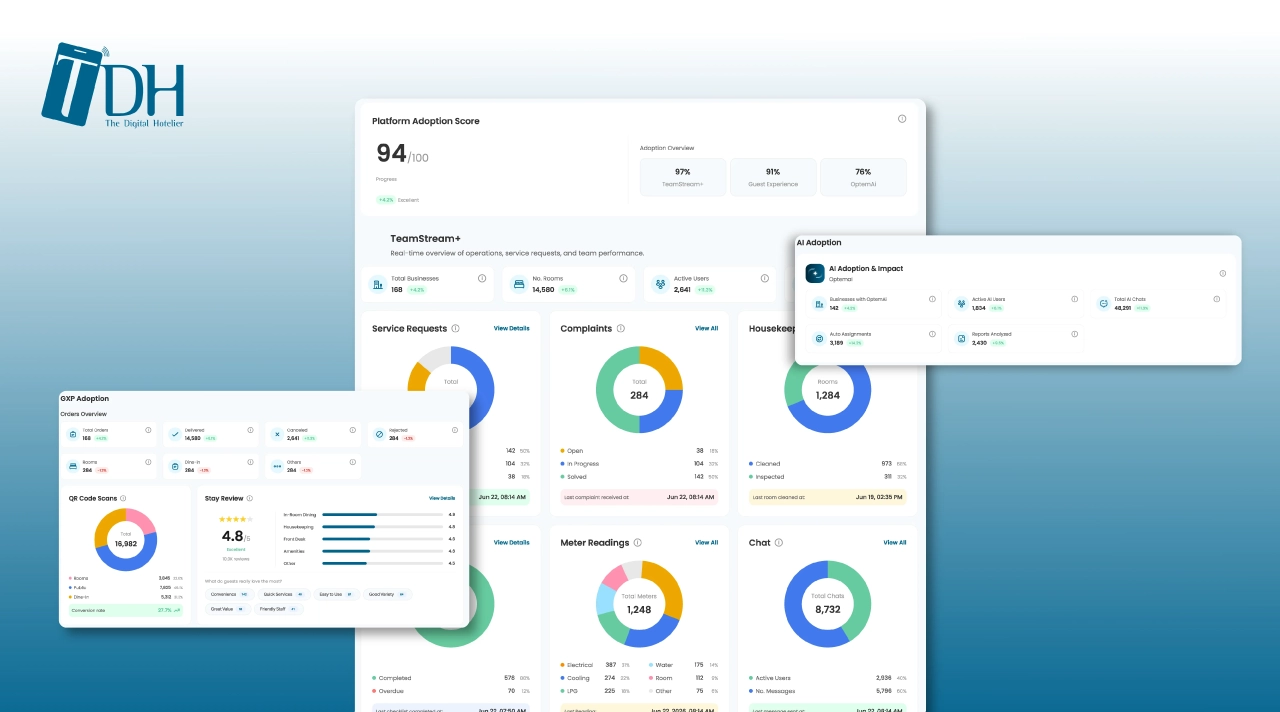
TeamStream+ gives employees a shared place to handle and track operational work. Depending on the hotel’s configuration and integrations, food orders can move through TDH or connect with existing restaurant systems.
That means less reliance on calls and repeated messages to keep an order moving.
The hotel can also examine available order records, operational issues, guest feedback, and complaints instead of judging performance by revenue alone.
Mohamed Yehia, Food and Beverage Manager at Crowne Plaza Riyadh Palace, describes the effect across the hotel’s outlets:
Since the TDH implementation, we have seen significant improvements in sales performance across our outlets.
The aim is simple: make ordering easy for guests and make fulfillment easier for the team behind the scenes.
Make Room Service Worth Choosing Again
Guests order room service because it is convenient. That convenience holds up only when ordering is easy and the meal arrives the way the guest expected it.
More orders and larger checks can raise revenue. Whether that growth is worth keeping depends on what each order costs to prepare and deliver, and on how guests rate the service afterwards.
A practical place to start is wherever guests hesitate or the operation slows down. Fix that point first, then measure what changes.