


Key Takeaways:
- Contactless means the guest’s own phone replaces the queue, the paper form, the key card and the call to the front desk.
- Contactless, self-service and automation are not the same thing. A QR menu with a runner still writing orders on a pad automates nothing.
- The driver is margin, not hygiene. AHLA puts hotel GOPPAR at around 90% of 2019 levels while payroll keeps climbing.
- The in-room and on-property QR layer earns more than the mobile key, because it is open every hour of the stay.
- Integration decides the outcome: Skift found 63% of hotel tech budgets still go on maintaining legacy systems.
Keep a staffed path. A guest whose digital key fails takes the plastic one and never opens the app again.
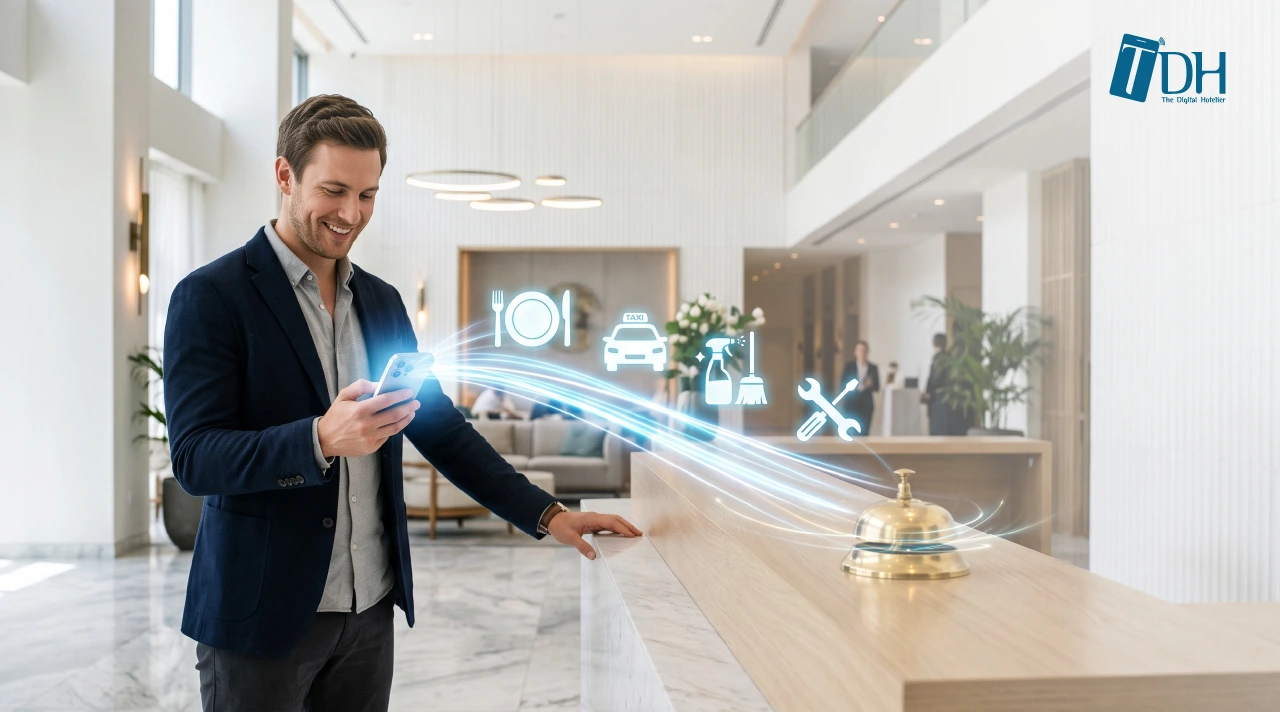
Contactless technology in hospitality means letting guests use their own phone to do the things that used to require a line, a paper form, a plastic key card, or a call to the front desk. Checking in. Opening the room door. Reading the menu. Ordering breakfast. Asking for extra towels. Paying the bill.
It arrived quickly as a health measure. It stayed for a more durable reason: it is faster for the guest and cheaper for the hotel.
The results, though, vary enormously between properties, and the technology itself is rarely the reason. One guest arrives at midnight, walks past the line, opens the room with their phone, and orders food from bed without speaking to anyone. Another guest, at a hotel with the same tools installed, stands in the hallway tapping a phone against a lock that will not open, then rides the elevator back down to the lobby they were trying to avoid.
Same technology, opposite experience. What separates the two is how it was set up, and whether it is properly connected to the people and systems behind it.
This guide covers what contactless technology in hospitality actually includes, why it now affects profit and not just convenience, the main types hotels are using today, what guests genuinely say about it, and how to introduce it without damaging service.
What Contactless Technology in Hospitality Actually Means
Contactless technology in hospitality refers to any system that lets a guest complete a transaction, request, or interaction without touching a shared surface, a printed document, or a staff-operated terminal. In practice, it means the guest’s own phone becomes the interface for things that used to require a line, a paper form, a laminated menu, or a call to the front desk.
The definition is broader than most operators assume. Contactless is not a product you buy once. It is a layer that runs the length of the stay:
- Before arrival: online check-in, digital registration, identity verification, pre-arrival messaging
- On arrival: self-service kiosks, mobile keys, digital registration cards
- In-room and on-property: QR-accessed guest directories, digital menus and ordering, housekeeping and maintenance requests, spa and restaurant booking
- At the point of sale: tap-to-pay, digital wallets, and orders that post straight onto the guest’s room bill or the hotel’s point-of-sale system without a staff member typing anything in.
- At departure: mobile checkout, digital folios, review capture
Contactless, self-service, and automated are three different things
These terms get used interchangeably, and the confusion leads to bad purchasing decisions.
Contactless removes the physical touchpoint. Self-service removes the staff member from the transaction. Automation removes the manual step behind the scenes. A QR menu is contactless and self-service, but if a runner still writes the order on a pad and walks it to the kitchen, nothing has been automated. The guest experience improved. The operation did not.
Properties that see real returns treat contactless as all three at once: a guest-facing interface, a service channel, and an operational trigger. The ones that treat it as a front-end-only tend to discover they have added a screen without removing a single phone call.
Why Contactless Technology Matters Right Now
The margin problem is driving the decision
Hotels are busy and still not as profitable as they were. The American Hotel & Lodging Association’s 2026 State of the Industry report puts gross operating profit per available room at roughly 90% of 2019 levels, with elevated operating expenses named as the primary cause.
Labor is the largest single pressure. Total salaries, wages, and benefits paid by US hotels stood at nearly $128 billion in 2025 and are projected to approach $131 billion in 2026.
That gap between strong demand and constrained profit is why contactless has stopped being a guest-experience conversation and become a margin conversation. PwC’s US Hospitality Directions for May 2026 states the position directly: with topline growth returning but moderate, operator gains will likely come from cost discipline, technology adoption, and the orchestration of technology and human service.
The word doing the work in that passage is orchestration. Not automation instead of people. A deliberate decision about which interactions should be digital and which should stay human.
There is a competitive dimension too. Deloitte’s 2026 travel outlook describes travelers trimming trip frequency, length, distance, accommodation class and in-destination spending, with financial caution now reaching higher income brackets. A guest spending more carefully judges more carefully. Friction that felt tolerable when travel felt abundant becomes a reason to book elsewhere, which is precisely how better reviews, stronger loyalty and genuine differentiation compound for properties that get this right.
Changing guest expectations
Today’s contactless guest experience is heavily shaped by habits formed by retail, ride-hailing and food delivery. They expect a service to be available immediately, at any hour, from the device already in their hand. Waiting fifteen minutes in an arrivals line after a long flight reads as a failure rather than as normal hotel procedure.
Those expectations are visible in satisfaction data. The American Customer Satisfaction Index Travel Study 2026, based on 14,910 completed surveys collected between April 2025 and March 2026, recorded lodging satisfaction rising 1% to a score of 77, with business travelers up 3% year over year. The study attributes the industry’s gains to improvements across the customer experience, including check-in and checkout and brand mobile apps.
What an index score cannot show is what happens on the stays that go wrong. Satisfaction studies measure averages across thousands of guests. They do not record the failure modes that decide whether a guest ever uses a feature again, and traveler forums do. In FlyerTalk’s long-running digital key discussion, guests describe completing mobile check-in, selecting a digital key, then being told the front desk still has to verify their identity, which removes the only reason to use the feature.
Others report keys that work on arrival and stop working after a gym visit, or that open the bedroom but not the lounge or the elevator. The resolution experienced travelers describe is the one that should worry operators: they take the plastic card and stop thinking about it. A rising satisfaction score and a quietly abandoned feature can coexist comfortably.
That is what maturity looks like. Contactless technology no longer earns praise for existing. It earns attention when it breaks.
Operational benefits
The operational case is simpler than the marketing case. Contactless technology moves repetitive work off the payroll and into software, at the points where lines form.
According to PwC, self-check-in kiosks are especially common in budget and mid-scale hotels, where tighter margins meet guests who care less about a staffed check-in.
The same analysis points to AI-driven occupancy forecasting allowing hotels to align staffing with anticipated demand, and to chatbots and AI-enabled concierges handling routine guest questions and reducing front desk workload.
That analysis measures workload removed from the front desk. It does not measure where the workload reappears. In one FlyerTalk thread, a guest describes calling guest services because the air conditioning was blowing cold air and would not switch off, reaching an automated system that promised to send someone and delivered nothing, and finally solving it by bypassing the system to ring the desk directly.
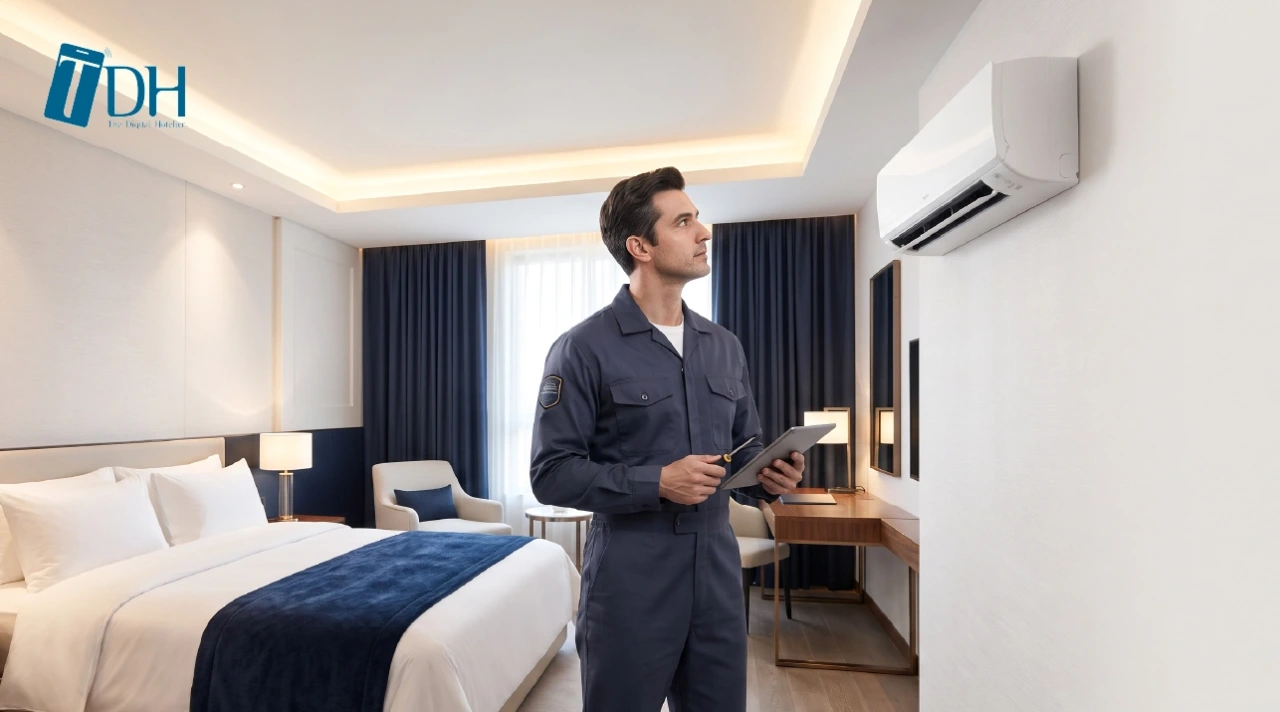
The distinction is operational rather than technical. Requests automate well, because the guest can name the outcome they want. Faults do not, because the guest is reporting a symptom and somebody still has to diagnose it. Routing both through the same layer saves no labor on the second category. It defers the cost into a complaint.
The practical gains follow a consistent pattern across properties: faster service delivery because requests are routed rather than relayed, shorter waiting times at arrival and at the restaurant, higher staff productivity because fewer people are tied to a fixed counter, fewer manual processes to audit, and better resource allocation because managers can finally see where demand actually falls during the day.
The Main Types of Contactless Technology in Hospitality
Five categories cover almost everything in commercial use today. Most properties have two or three. Very few have all five working together, which is where the value actually sits.
1. Contactless arrival: online check-in, kiosks, and mobile keys
The arrival layer removes the line. Online check-in collects registration details and identity documents before the guest travels. Kiosks handle the walk-up. Mobile keys replace the plastic card entirely.
Kiosks in particular have found a clear commercial home. PwC’s hospitality outlook identifies self-check-in kiosks as a cost-saving measure that is particularly prevalent in budget and mid-scale hotels, where margins are tighter, and guests place less emphasis on the check-in interaction. That segmentation matters. The same feature that reads as efficient in a 140-room select-service property can read as cold in a resort where arrival is part of the product.
The cost case for kiosks is well established. What it leaves out is what guests do when the kiosk cannot help them. A widely shared account from 2025 describes a guest arriving at a US property to find no staff, a single candle burning on an empty counter, and a remote worker on a tablet, with the group ahead of him arguing with the machine after being told their towels would arrive the following day.
The video passed two million views, and the brand later confirmed the equipment was not approved and would be removed. The lesson is not that kiosks fail. It is that a self-service lane with no staffed lane beside it turns every non-standard problem into a public complaint.
2. The on-property layer: QR-accessed directories, menus, and service requests
This is the broadest and least standardized category. A single scannable code placed in the room, at the pool, on the restaurant table, or in the spa can open a guest directory, a live menu, a service request form, or a booking calendar.
Its advantage over the arrival layer is reach. A mobile key only matters twice a day. This layer is available every hour of the stay, which is why most of the extra revenue sits here rather than at check-in.
Three ordinary examples make the point. A guest by the pool wants another drink but cannot see a member of staff, so they do not order one. A guest would happily pay for a late checkout but does not want to phone the front desk to ask, so they do not book it. A guest decides at eleven that they want a massage, but the spa desk closes at six, so the treatment is never sold. In each case, the hotel lost the sale to friction rather than to price. Removing that friction is the entire commercial argument for this layer.
A well-designed guest experience platform consolidates this entire layer. One QR code per location opens digital menus and ordering, the guest directory, housekeeping and maintenance requests, restaurant and spa booking, and upsell offers, in multiple languages, with nothing for the guest to install.
3. Contactless payments and room charging
Tap-to-pay and digital wallets have become the default expectation rather than a differentiator, but the hotel-specific version matters more than the retail one: the ability for a guest to order something anywhere on the property and have it post automatically to their room folio or the point-of-sale system, with no card, no signature, and no runner carrying a payment terminal across a pool deck.
When this works, the payment step disappears from the guest’s awareness entirely. When it does not, every contactless order ends in a very contactful conversation about the bill.
4. Messaging
Messaging has become one of the most effective communication channels in modern hospitality because it matches how guests naturally communicate today. Instead of calling the front desk for every request, guests prefer sending a quick message whenever they need assistance.
This lowers the barrier to communication, encouraging guests to report issues as soon as they arise. As a result, hotels can resolve problems during the stay rather than discovering them later through negative reviews or low satisfaction scores.
5. The back-of-house layer most guests never see
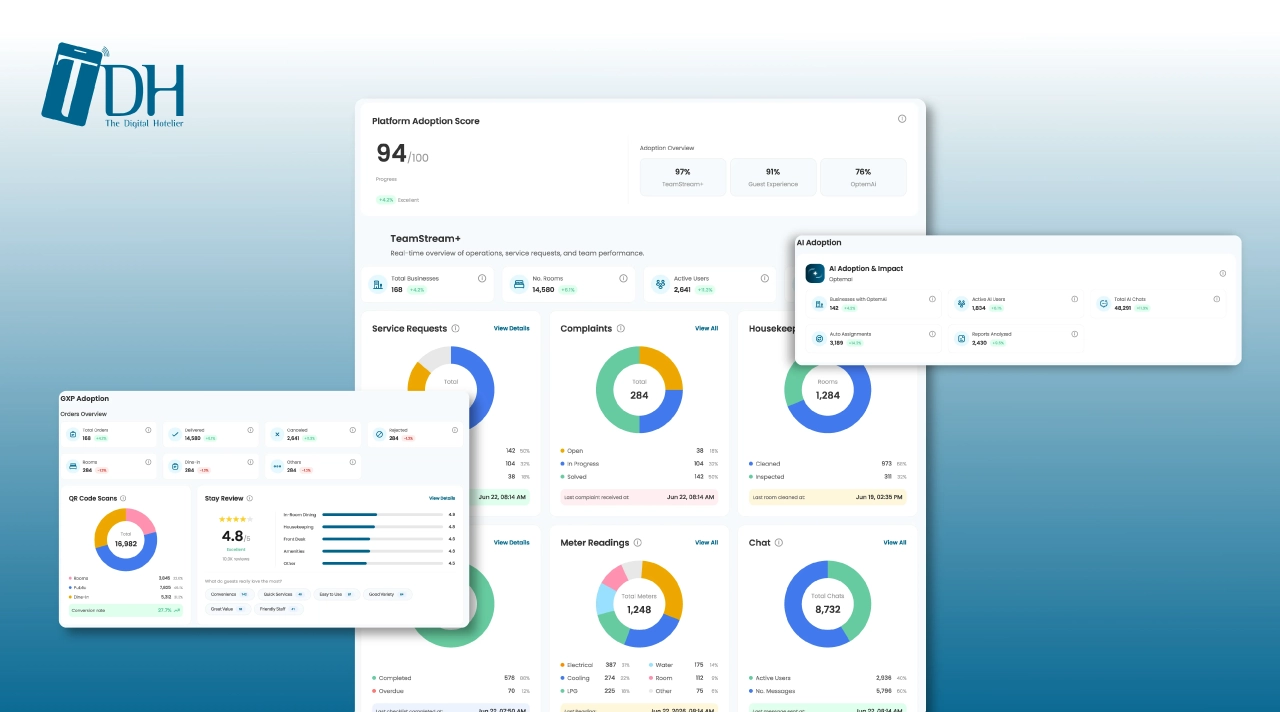
Contactless technology that only touches the guest is half a system. The operational half routes the request: a housekeeping task that lands on the right attendant’s phone, a maintenance report with a photo attached, a complaint logged against a room number rather than remembered by whoever was on shift.
This is the layer that determines whether contactless technology actually reduces workload or simply relocates it. A guest request that arrives digitally and is then transcribed onto paper has created work, not removed it.
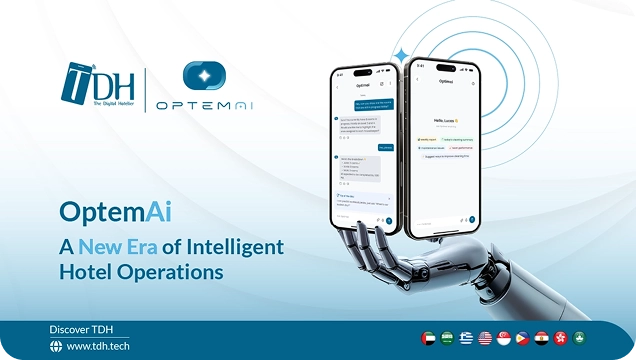
Modern hotel operations platforms solve this by turning every guest action into an assigned, tracked task for the relevant department, rather than a message somebody has to remember to act on. Advanced platforms then layer operational AI on top of the record these tasks leave behind, analyzing internal operational data, such as task completion times, shift structures, and recurring complaints, to return actionable findings to management. It is an internal orchestration layer. Guests never see it, but they experience the speed it creates.
Benefits of Contactless Technology
Benefits for Guests
Convenience
Convenience is usually measured in minutes saved, which is the least interesting part of it. The real cost of the traditional model is the effort of asking: finding a member of staff, waiting for a gap in their conversation, wondering whether you are interrupting, sometimes rehearsing the request in a language you do not speak well.
Contactless removes that effort, not just the wait, which changes not only how fast guests are served but how often they ask at all. It also breaks service free of the schedule. The spa desk closes at six, but the guest who decides at eleven that they want a treatment tomorrow finally has somewhere to put that decision.
Greater personalization
Most hotel personalization only works for guests the hotel already has a history with: a loyalty member, a repeat stay, someone who filled in a profile. That is a real group, but rarely the majority of guests on any given night. A first-time visitor, a walk-in, most guests arriving through an OTA have nothing to offer that kind of system, because there is no history to draw on yet.
A different kind of personalization does not need that history. A QR code scanned at the pool opens the pool menu. Scanned at the spa, the same QR opens spa booking. Scanned in the room, it opens whatever is relevant to being in the room. None of it depends on whether this guest has stayed before, only on where they are and what they came to do right now, true from the very first scan of the very first stay.
Language works the same way: a guest who picks Spanish when they start does not need to pick it again with every scan, no profile required, just a choice that carries through the session.
Better safety and hygiene
Reduced physical contact remains a genuine benefit even now that it is no longer the headline one. Fewer shared surfaces, no passed-around menus, and cleaner shared spaces matter to a segment of guests who will not raise it but will notice it.
More control
The most underrated benefit is agency. Self-service options let guests decide how much interaction they want, and flexible interactions let them switch between digital and human at will. Pricing works the same way.
A digital menu or service list shows the cost of every item before the guest commits, so they order knowing exactly what they are paying rather than agreeing to something priced vaguely over the phone. Nothing arrives on the final bill that the guest did not already see and accept.
Benefits for Hotels
Increased operational efficiency
Automation removes the repetitive layer of hotel work: transcribing requests, chasing up on status, and relaying messages between departments. Workflows get faster because tasks are routed to the right person immediately rather than passing through a supervisor, and because completion is recorded as it happens instead of at the end of a shift.
Reduced costs
The savings are unglamorous and cumulative. Lower paper usage across menus, directories and registration forms. Reduced staffing pressure at peak arrival and service times, without cutting the establishment. Fewer key cards to replace. Fewer printing runs every time a price or an opening time changes.
Better data collection
Every digital interaction leaves a record that a phone call does not. A guest who rings the front desk for a late checkout generates nothing beyond a note that may or may not get written down. The same request made digitally produces a timestamp, a room number, a category and an outcome, without anyone having to remember to log it.
The value is in what accumulates. Service usage analytics reveal when demand actually falls, which is often nothing like the shift pattern built around it, so a hotel can find that pool orders peak at four while the bar is staffed for six. Complaints become countable rather than anecdotal, which is the difference between sensing that the third floor has a problem and knowing that eleven guests reported the same fault in six weeks.
Higher revenue opportunities
Contactless channels sell at moments staff cannot. Spa upselling when the guest is thinking about it rather than when the desk is open, restaurant promotions surfaced at the point of browsing, orders placed in a guest’s own language that an English-only menu would have lost, and rooms sold as early check-ins the moment housekeeping marks them ready rather than whenever the front desk gets around to checking.
Price rarely explains lost ancillary revenue. Friction does: the drink not ordered because no member of staff was visible, the treatment not booked because the desk had closed, the order never placed because the menu was in a language the guest could not read. Removing that friction is the commercial argument for the entire category.
Challenges of Implementing Contactless Technology
Initial investment
The visible costs are software licensing and hardware such as kiosks, locks and terminals. The cost that derails budgets is integration, because connecting new tools to an existing property management system is rarely a configuration exercise.
The scale of that problem is well documented. Skift Research’s Hotel Technology Priorities 2025 found that 63% of hotel technology budgets are still spent maintaining legacy systems, many of which are not AI-compatible and do not allow complex data integration. A hotel in that position is not choosing between features. It is choosing between modernizing foundations and layering another disconnected screen on top of them.
A contactless front end bolted onto a disconnected back end produces the worst of both outcomes: guests who now expect instant service, and an operation still running on radio calls and handwritten notes. The request arrives faster. It does not get completed faster.
Staff training
New systems change processes, and processes are where adoption fails. Teams need to learn the tool, but more importantly they need to know what to do when it does not work: how to issue a key manually, how to take an order when the menu will not load, how to reassure a guest who has just tried three times.
Cybersecurity risks
Contactless systems collect identity documents, payment credentials and behavioral data, which raises the stakes considerably. The essential controls are guest privacy by design, secure payment handling through tokenization, encryption of data at rest and in transit, multi-factor authentication for staff accounts, and demonstrable compliance with data protection regulation such as GDPR.
Hoteliers are alert to this. Hospitality Technology’s 2024 Lodging Technology Study, covering respondents representing more than 10,000 properties worldwide, found 76% prioritizing enhanced data security, while 69% named the difficulty of integrating new technology with existing legacy systems as their leading challenge.
Best Practices for Successfully Implementing Contactless Technology
Understand guest needs
Start with your own guests rather than with an industry trend. Survey them on what they would actually use, and read the feedback you already hold. Complaint logs and review text are usually more honest than a survey, because they record the moments where the current process failed rather than what guests imagine they might like.
Choose the right solutions
Match the tool to the property rather than to the brochure. Hotel size determines whether a kiosk pays for itself. Budget determines whether in-room controls are realistic this cycle or the one after. Existing systems determine what can integrate without custom development. Scalability determines whether the platform still works when you add a second property.
Before looking at any platform, walk your own property the way a guest would and write down every moment where someone has to wait, stand in line, telephone, find a member of staff, or repeat information they have already given you. That list is your specification, and it should be written before a single vendor demo.
Hotels that buy the platform first and look for problems it solves afterwards tend to end up in the same place: two or three overlapping systems that do not talk to each other, and a digital guest directory still showing last season’s restaurant business hours because nobody was made responsible for updating it.
Treat integration as the requirement, not the upgrade
Integration is what separates a system that saves time from one that moves work around. The connections that matter are the property management system, the CRM, the booking engine, the payment gateway and the channel manager. If a food order does not reach the kitchen, if a room marked clean does not update the property management system, or if a charge has to be typed into the folio by hand, the hotel has added a digital step without removing a manual one.
Ask every vendor one direct question: after the guest taps send, which of your systems receive that information automatically, and which still need a member of staff to copy it across? The second list should be empty or very close to it. Platforms that connect to the existing PMS and POS so that orders post directly to the guest’s room bill are solving a structurally different problem from those that simply add another screen.
Design for the least confident guest in the building
Accessibility is not a compliance checkbox here; it is a revenue question. If the code is printed at eight point on a dark background, sits behind a slow load, requires an account, or only works in one language, a meaningful proportion of your guests simply will not use it. Large targets, no login, fast loading, plain wording, and genuine multilingual support are not luxuries. They are the difference between adoption and a decorative sticker.
Maintain human hospitality
Technology should extend personal service rather than substitute for it. The fastest way to turn a convenience into a complaint is to make the digital route compulsory. Some guests want to be greeted, ask about the neighborhood, and take a key from a person. Others want to reach their room without speaking to anyone.
Neither group is worth less than the other, and nothing in the booking tells you which is arriving. Keep a staffed path available, make sure guests can see it, and treat every system failure as a service recovery moment rather than as the guest’s problem to solve.
What Makes Contactless Technology Work
Contactless technology has stopped being an optional upgrade and become part of how hotels manage cost, service capacity, and staff time. The real advantage no longer comes from offering the most digital features, but from implementing technology that removes friction, supports staff, and fits naturally into hotel operations.
That is mostly an integration problem rather than a purchasing one, and it is where a guest-facing channel connected to a real operations system earns its place.
See It on Your Property
The clearest way to judge a contactless platform is to watch a guest request turn into a routed, tracked task on your own property. Book a demo of The Digital Hotelier, and we will walk through what each scan opens, in your guests’ languages, and where every request lands on the operations side.
Frequently Asked Questions
What is an example of contactless technology in hospitality?
A scannable QR code placed in a hotel room that opens the guest directory, the room service menu, and a housekeeping request form on the guest’s own phone, without any app download. Other common examples include mobile room keys, self-service check-in kiosks, tap-to-pay terminals, and messaging-based digital concierge services.
What types of technology are used in hospitality?
Hotels typically run five overlapping technology categories: property management systems that hold reservations and folios, point-of-sale systems for food, beverage and retail, revenue management systems for pricing, guest-facing technology such as contactless ordering and messaging, and operational platforms that manage housekeeping, maintenance, and internal communication. Contactless technology is not a separate category. It is the guest-facing surface of several of these systems.
Does contactless technology replace hotel staff?
In practice, it reshapes roles rather than removing them. It absorbs repetitive transactional work such as waiting in line, order taking, and status updates, which frees staff for the interactions that require judgment and warmth. Properties that use it purely to cut headcount tend to discover that guest recovery, the moment when something goes wrong, still requires a capable person.
What is the biggest mistake hotels make with contactless technology?
Deploying the guest-facing layer without connecting it to the operation behind it. If your staff still has to manually transfer digital requests into another system, the technology has improved the guest’s first impression but made the operation slower. Another common mistake is making the digital path compulsory.