



Key Takeaways:
- A checklist is what the program runs on. It isn’t the program.
- Every task needs a frequency, one named owner, pass/fail criteria, and a record you can find six months later.
- The frequencies below are a starting point. Regulations, manufacturer requirements and brand standards come first.
- Paper and spreadsheets work at a small property. They get harder to trust as the asset list and the team grow.
Most hotel maintenance failures don’t start as failures. They start as small things that nobody catches in time. The faucet that drips a little more each week. The chiller that runs a little louder. The smoke detector that nobody has tested in eight months because the binder where someone signs off on it is missing.
By the time those small things become incidents, they’re expensive, and a checklist is how a preventive program actually catches them in time.
This guide gives you the full property-wide preventive maintenance checklist that hotel operations teams use, organized by frequency and by area. It draws on ASHRAE, NFPA and other internationally referenced standards as reference points; your local code always takes precedence.
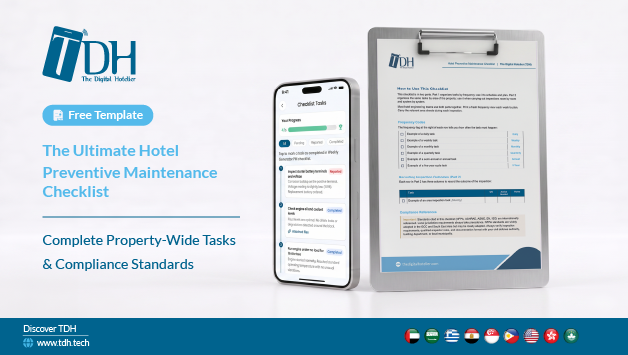
At the end, you can download a free PDF version structured for daily use by your engineering team.
Why a Hotel PM Checklist Matters More Than Ever
Hotels operate under a few constraints that many other building types don’t share, which we cover in our guide to hotel preventive maintenance. There is no shutdown window. The property is occupied 24 hours a day, 365 days a year.
Equipment failures happen in front of paying guests. And the cost of a single bad review on Google, Booking.com, or any major OTA extends across years of future booking decisions.
J.D. Power’s 2025 North America Hotel Guest Satisfaction Index Study found that 12 percent of stays involved a problem of some kind, and that when one occurred, satisfaction fell 217 points on a 1,000-point scale.
For a deeper view of the operational and financial case, see our companion guide on the importance of preventive maintenance in hotels, which covers the cascade of costs that follow a single maintenance failure.
The economic case is sharper than most operators realize. The U.S. Department of Energy’s Operations & Maintenance Best Practices Guide (Release 3.0) estimates that a sound preventive maintenance program reduces overall maintenance costs by 12 to 18 percent compared to reactive operations, and it lists longer equipment life among the benefits.
A checklist is not the same thing as a PM program. A checklist is the operational tool that the program runs on. Without it, the program is a memo nobody reads.
What a Hotel Preventive Maintenance Checklist Actually Is
A hotel preventive maintenance checklist is a documented, recurring set of inspection and service tasks assigned to specific systems, areas, and equipment across the property. Each task has a defined frequency, an assigned owner, a standard procedure, and a verifiable completion record.
That last part is what separates a working checklist from a piece of paper:
- Defined frequency: daily, weekly, monthly, quarterly, semi-annual, or annual, depending on the system
- Assigned owner: a named technician, supervisor, department, or external contractor
- Standard procedure: the exact steps to perform, with pass/fail criteria
- Verifiable completion: a timestamped, signed (digitally or physically) record of who did what and when
If any of those four are missing, you don’t have a working preventive maintenance checklist. You have a document that nobody verifies.
The Master Hotel PM Checklist by Frequency
Frequency is the spine of any preventive maintenance program. Tasks that need daily eyes are different from tasks that need quarterly attention from a certified contractor. Get the frequency wrong and you either over-burden the team or miss what matters.
Below is a suggested starting schedule for the checks your team runs. Formal inspection and testing of regulated systems (fire protection, emergency power, elevators, pressure plant, pools and water systems) follows your local code, the manufacturer and your service contracts, so those tasks are listed separately under Regulated Systems. Adjust the rest to your asset mix, climate and failure history.
Hotel Preventive Maintenance Frequency Matrix
| System / Area | Daily | Weekly | Monthly | Quarterly | Semi-Annual / Annual | Multi-Year |
| Guest Rooms (HVAC, plumbing, electrical) | ✓ | ✓ (sample) | ✓ | ✓ | ✓ | |
| Public Areas (lobby, corridors) | ✓ | ✓ | ✓ | ✓ | ✓ | |
| Fire Alarm | ✓ | |||||
| Elevators | ✓ | ✓ | ||||
| HVAC Plant (chillers, boilers, AHU) | ✓ | ✓ | ✓ | ✓ | ||
| Generator | ✓ | ✓ (inspection) | ✓ | |||
| Pool and Spa | ✓ | ✓ | ✓ | ✓ | ✓ | |
| Kitchen Equipment | ✓ | ✓ | ✓ | ✓ | ✓ | |
| Exterior and Grounds | ✓ | ✓ | ✓ | ✓ | ||
| Laundry Equipment (where on-site) | ✓ | ✓ | ✓ | ✓ | ✓ | |
| Roof and Building Envelope | ✓ (drains) | ✓ |
Daily Checks
Daily checks are about visibility. They are short, fast, and largely visual or sensory. The goal is early warning, not deep diagnostics.
- Guest room visual inspection during housekeeping turnover (lights, plumbing, climate)
- Pool and spa water chemistry (pH, disinfectant level, alkalinity), pump pressure, visible debris
- Lobby, corridor, and public-area lighting confirmation
- Public restroom function check (faucets, flush, drain, paper supply)
- Kitchen refrigeration and freezer temperature logs
- Boiler room and mechanical plant visual walkthrough (odor, sound, leaks, gauges)
- Elevator function check (call buttons, leveling, door operation)
- Fire alarm panel status check (no active trouble signals)
- Generator status check (no fault codes, fuel level)
Weekly Checks
Weekly checks go a layer deeper. They are still relatively quick but require some manipulation, testing, or documentation beyond visual confirmation.
- Pool chemistry deep test, including total alkalinity and combined chlorine
- Public-area HVAC supply temperatures and airflow
- Emergency exit signage and emergency lighting visual test
- Kitchen exhaust hood filter condition check
- Trash chute and laundry chute function and odor
- Guest-room minibar and coffee equipment performance sample (5 to 10 percent of in-service rooms)
- Wi-Fi access point connectivity sample across floors
- Loading-dock equipment, dock leveler operation
- Generator weekly inspection: fuel, oil and coolant levels, battery condition, alarm status
Monthly Checks
Monthly checks involve deeper inspection, calibration, and minor service.
- HVAC filter inspection and replacement as needed: ASHRAE Standard 62.1 establishes ventilation requirements for commercial buildings. Filter replacement intervals depend on filter rating, system type, and local air quality, and a monthly check is a sensible starting point for hotel guest-room systems.
- Boiler combustion check, water treatment levels
- Plumbing fixture comprehensive test in 10 to 20 percent of guest rooms (rotating sample)
- Elevator car interior condition, leveling accuracy, communication system
- Roof drain and gutter visual inspection
Quarterly Checks
Quarterly tasks are typically the most intensive per cycle and frequently involve external contractors or certified technicians.
- HVAC chiller and condenser deep service, refrigerant levels, coil cleaning
- Carpet and upholstery deep clean rotation in guest rooms
- Public-area soft furnishings deep clean and accent lighting service cycle
- HVAC system performance verification, balancing, and calibration
Semi-Annual and Annual Checks
Annual cycles cover the major capital-adjacent service work and the strategic reset items. These are the tasks aimed at the costliest failures.
- Roof comprehensive inspection (membrane, drains, flashings, parapets)
- Building envelope inspection (windows, doors, exterior cladding, sealants)
- HVAC ductwork inspection and cleaning where indicated
- Generator annual full inspection, oil and coolant change, battery service
- Comprehensive guest-room deep maintenance cycle (every door, every fixture, every electrical outlet)
- Public-area comprehensive condition audit: flooring wear, furniture and upholstery, fixture integrity, and finishes across lobby, corridors, restaurants, and all guest-facing spaces
Regulated Systems: Scope, Not Schedule
Fire protection, emergency power, elevators, heating and pressure plant, electrical systems, water systems, kitchens and pools carry inspection and testing requirements set by local code, equipment manufacturers and service contracts. Agree the intervals with your contractors and local authority; the list below is the scope your program needs to track.
- Fire protection: sprinkler inspection and testing (alarm and supervisory devices, valves, gauges, main drain test, antifreeze testing where applicable), fire alarm functional testing, kitchen hood and clean-agent suppression inspection. Full scope under Fire and Life Safety below.
- Emergency power: generator load testing, transfer switch testing under load, emergency lighting and exit-sign battery testing
- Elevators: inspection and certification by the authority your jurisdiction designates
- Heating and pressure plant: boiler safety device testing (low water cutoff, pressure relief, flame sensor), boiler inspection and certification, pressure vessel inspection
- Electrical: thermographic inspection of panels and switchgear, comprehensive inspection by a qualified electrician
- Water systems: domestic hot-water temperature verification, backflow prevention device testing, cooling tower water treatment audit and cleaning, water management program review
- Kitchen and food safety: hood and duct inspection and cleaning, pest control inspection and treatment
- Pools and spas: inspections and compliance checks required by the local health authority or applicable code
Hotel Compliance Standards: Quick Reference
These are internationally referenced standards. Local requirements may vary. Always verify with your civil defense authority or local jurisdiction.
| Standard | What it Covers | Typical Owner / Support |
| NFPA 25 | Water-based fire protection (sprinklers, standpipes, fire pumps) | Engineering + fire protection contractor |
| NFPA 72 | Fire alarm and signaling systems | Engineering + fire alarm contractor |
| NFPA 96 | Commercial kitchen ventilation (hoods and ducts) | Engineering and F&B + specialist contractor |
| NFPA 70B | Electrical equipment maintenance | Engineering + qualified electrical contractor |
| NFPA 110 | Emergency and standby power (generators) | Engineering + generator vendor |
| NFPA 10 | Portable fire extinguishers | Engineering + extinguisher service contractor |
| NFPA 80 / 105 | Fire doors, fire dampers and smoke dampers | Engineering + fire door and damper contractor |
| ASHRAE 62.1 | Ventilation and indoor air quality | Engineering (HVAC) |
| ASHRAE 188 | Legionella risk in building water systems | Water management team + water treatment specialist |
| ASME A17.1 / EN 81 | Elevator safety | Engineering + elevator contractor; authority inspection where required |
| Local occupational safety code (e.g., OSHA) | General workplace safety, equipment guarding | Safety officer |
| Local health code | Pool, spa and kitchen sanitation | Engineering, housekeeping and F&B; local authority or inspector as required |
| Industry best practice (e.g., DOE FEMP) | Operations and maintenance practice | Engineering |
The Master Hotel PM Checklist by Area
Frequency tells you when. Area tells you where. The same task, like ‘check lighting,’ looks very different in a guest room (4 to 6 fixtures, intimate inspection) versus a corridor (50+ fixtures, walking inspection) versus a back-of-house mechanical room (high-bay industrial fixtures, ladder access).
Guest Rooms
Guest rooms are where most maintenance complaints originate, because they are where the guest spends the bulk of their stay and where failure is most personally felt.
HVAC and Climate
- Thermostat calibration and accuracy verification
- Filter inspection and replacement per manufacturer interval
- Supply and return air vent function and cleanliness
- Audible noise check (compressor, fan, ductwork rattles)
- Condensate drain and pan inspection
- Refrigerant performance check (delta T across coil)
Plumbing
- Faucet flow and temperature on hot and cold sides
- Shower flow, temperature stability, and diverter operation
- Toilet flush function, fill rate, no continuous run
- Drain performance (sink, tub, shower, toilet)
- Visual inspection under sinks for leaks or moisture
- Caulking and sealant condition around tub, shower, and vanity
Electrical
- Every light fixture functioning at correct brightness
- Every outlet tested for power and ground
- USB ports and integrated charging functional
- Switches respond and don’t crackle
- Bedside lamp cords intact, no fraying
- Bathroom GFCI / RCD test (Ground Fault Circuit Interrupter in the U.S., Residual Current Device in the GCC, UK, and South East Asia)
- Smart room controls: tablet, voice assistant, mobile key reader (where installed)
Safety and Compliance
- Smoke detector test (push-to-test or smoke aerosol)
- Carbon monoxide detector test where applicable
- Door lock function (key card, deadbolt, latch)
- Door closer adjustment, fire-rated door integrity
- Peephole clear and operational
- Emergency exit instructions present and legible
- Sprinkler head condition (no obstruction, no paint)
Furniture, Fixtures, and Equipment
- Bed frame, mattress, and headboard condition
- Soft furnishings (chairs, couches) for tears or stains
- Drawer slides, cabinet hinges, handle tightness
- Curtain operation and curtain rod stability
- Mirror, picture frame, and wall fixture mounting
- Television, remote, streaming connectivity
- In-room safe operation
- Coffee maker, kettle, minibar function
Public Areas
Public areas form the guest’s first and last impression. They also see the highest cumulative foot traffic of any space in the property, which means wear accumulates faster than most operators schedule for.
Lobby and Reception
- Automatic door operation, sensor function, safety stop
- Floor surfaces (slip resistance, transition strips, gaps)
- Lobby lighting balance and color temperature
- HVAC supply and return performance
- Reception desk equipment, monitors, terminals
- Lobby restroom comprehensive function check
Corridors and Stairwells
- Lighting uniformity, no dark spots between fixtures
- Wall finish condition (scuffs, dents, peeling, marks from luggage)
- Carpet or hard-floor wear pattern, transition condition
- Signage condition (room numbers, directional, fire egress)
- Fire door integrity, self-closing function, door gaps within code
- Stairwell handrail security, stair tread condition
Restaurants, Bars, and Lounges
- HVAC capacity for occupancy load and kitchen exhaust make-up
- Refrigeration units (back-bar coolers, walk-ins) at safe temperature
- Dishwasher final-rinse temperature (per local health code)
- Bar drainage and ice machine operation
- Furniture (chair stability, table levelers, banquette upholstery)
- Lighting and dimmer function
Banquet and Event Spaces (where applicable)
- Weekly: AV equipment function check (microphones, projectors, screens)
- Weekly: stackable furniture condition
- Monthly: portable staging integrity
- Monthly: HVAC zone control for variable occupancy
- Quarterly: dance floor condition (where installed)
Mechanical and Back-of-House
Behind every guest-facing experience is mechanical infrastructure that runs continuously. Failure in any of these systems creates cascading impacts that hit guests within minutes.
HVAC Plant
- Chiller performance (approach, flow, refrigerant levels, log readings)
- Cooling tower water treatment, drift eliminator, fill condition
- Boiler combustion analysis, water chemistry, blowdown
- Pump operation (vibration, sound, seal condition)
- Air handler belt tension, motor amps, filter pressure drop
- BMS (Building Management System) sensor calibration
Plumbing and Water
- Hot water recirculation pump operation
- Domestic water booster pump performance
- Backflow preventer test per water authority requirement
- Water softener salt level and regeneration
- Water heater anode rod inspection and replacement when consumed (extends tank life; typically requires partial drain of tank)
- Sump pump and ejector pump function
Electrical and Power
- Main switchgear thermographic scan
- Generator load test (per manufacturer guidance and local code)
- UPS battery condition test
- Panel labeling accuracy and clearances per NEC (U.S.) or local electrical code
- Emergency power transfer switch operation
- Lightning protection system (where applicable)
Laundry Equipment (where on-site)
- Daily: lint trap cleaning on dryers, water/detergent levels
- Weekly: washer drum cleaning, gasket inspection
- Monthly: drain line check, steam pressure on pressers
- Quarterly: motor and bearing inspection, calibration
- Annual: comprehensive PM by qualified vendor
Fire and Life Safety
Fire and life safety systems carry the strictest documentation requirements of anything on a hotel property. They are also the systems where missed inspections create the largest liability exposure.
NFPA 25 governs water-based fire protection systems. NFPA 72 governs fire alarm and signaling. NFPA 96 governs commercial cooking ventilation. Each has its own inspection cycle, and each requires documented records that survive auditor review.
In the GCC, fire safety requirements come from national fire codes and the authorities that enforce them, and many of these codes reference NFPA standards. Always verify with your local authority.
Inspection and testing intervals for these systems come from your local code and service contracts. Depending on the system installed, the scope may include:
Sprinkler System
- Dry pipe valve gauges (where applicable)
- Control valves visual inspection
- Alarm and supervisory devices
- Main drain test, antifreeze concentration test (where applicable), full system inspection
- Internal pipe inspection for obstructions
Fire Alarm
- Panel status and trouble signals (the team also checks this daily)
- Visual inspection of detection devices and notification appliances
- Functional system testing, including the monitoring connection where applicable
- Review of open faults and outstanding contractor actions
Suppression Systems
- Kitchen hood suppression system inspection by a specialist contractor
- Clean-agent systems (data center, electrical room)
- Portable fire extinguishers: visual checks by the team, servicing by a specialist contractor
- Standpipes: testing by your fire protection contractor
Pool and Spa
Pool maintenance is one of the most regulated aspects of a hotel’s physical operation, varying by jurisdiction and commonly requiring daily chemistry logs and documented service.
Keep pH, disinfectant levels and alkalinity within the ranges your local health code sets; pool and spa requirements may differ.
- Daily: pH, disinfectant level, total alkalinity, calcium hardness logs
- Daily: visible water clarity, debris, surface oils
- Daily: pump pressure, filter pressure differential
- Weekly: vacuum, brush walls, deep test (combined chlorine, cyanuric acid)
- Weekly: tile and grout condition, deck slip-resistance
- Monthly: backwash filter (or per pressure differential)
- Quarterly: pump and motor inspection, valve actuation
- Annual: shell inspection, full equipment service. Drain covers and anti-entrapment compliance: per the VGB Act in the U.S., or local drain safety code elsewhere
Spa Treatment Areas (where applicable)
- Daily: treatment room cleanliness, table hydraulic function
- Weekly: sauna heater function, stone condition (where applicable)
- Weekly: steam room temperature, generator function
- Monthly: hammam heating element, marble surface condition
- Quarterly: deep clean of all wet areas, mold inspection
- Annual: hydraulic table service, sauna wood treatment
Kitchen and F&B Equipment
- Daily: refrigeration temperature logs (HACCP)
- Daily: dishwasher final rinse temperature
- Daily: hood filter condition (high-volume operations)
- Weekly: oven and range cleaning, ice machine inspection
- Monthly: ice machine sanitation, walk-in coil cleaning
- Hood and duct inspection at the interval your cooking volume and local fire code require, cleaned when grease builds up
- Quarterly: refrigeration deep service (coil clean, gasket inspection, defrost)
- Annual: comprehensive cooking equipment inspection
Exterior and Grounds
- Weekly: parking lot lighting, signage, line-marking visibility
- Weekly: exterior trash receptacles, smoking area condition
- Monthly: roof drains, gutters, downspouts
- Monthly: exterior lighting comprehensive sweep
- Quarterly: irrigation system pressure and coverage
- Quarterly: parking lot striping, accessibility compliance verification (ADA in the U.S., local accessibility code elsewhere)
- Annual: roof comprehensive inspection (membrane, flashings, penetrations)
- Annual: building envelope (windows, doors, exterior cladding, expansion joints)
- Annual: paving condition, sealcoating cycle
Elevators
Elevators carry mandatory inspection cycles in nearly every jurisdiction worldwide. Keep the inspection certificate current and on display where required; most properties contract with a certified elevator service vendor for the technical work.
- Daily: function check (call buttons, leveling, doors)
- Monthly: car interior condition, emergency phone test
- Monthly: machine room cleanliness, no storage of unrelated items
- Contractor service at the frequency set in your maintenance contract
- Periodic inspection and certification, as your jurisdiction requires
- Load testing where your jurisdiction requires it
How to Build Your Property’s Custom Checklist
The lists above are the starting framework. Every property needs to adapt them to its specific asset mix, local climate, brand standards, and the code requirements in its jurisdiction.
Three things determine whether a hotel PM checklist actually gets used or sits in a binder: concrete pass/fail criteria (not “check HVAC,” but “confirm supply temperature is within 2 °C of setpoint, filter pressure drop under manufacturer threshold”), named ownership for every recurring task, and a completion record that can be retrieved in seconds rather than searched for in filing cabinets.
Adjust the frequencies, add property-specific assets, and assign tasks to the people who will actually complete them. That is when the framework above becomes your checklist.
Why Paper and Excel Break Down at Scale
Most hotels start their preventive maintenance program on paper or in a spreadsheet. Both work for small properties with limited assets. Both fail predictably as the operation scales.
Three Structural Problems
Information silos. A completed paper checklist is invisible to anyone who isn’t physically holding the binder. Engineering knows what got done. Front office, housekeeping, sales, and finance don’t. When a guest reports an issue at the front desk, the agent has no way to check whether maintenance has touched that room or that issue recently.
Pattern blindness. If Room 1201’s air conditioner was serviced four times in eight months, that pattern is buried in the binder. Nobody can see that this unit is a candidate for replacement rather than repeat repair. The data exists. It just isn’t queryable.
Audit fragility. When an insurance adjuster, a fire marshal, or a brand-standards auditor asks for documentation of a specific past inspection, the answer is a search through filing cabinets or digging through “Checklist_Final_v3.xlsx”. Sometimes the records are there. Sometimes they aren’t. The discovery happens at the worst possible moment.
These are structural problems. More diligence helps at a small property, but it doesn’t fix them as the operation grows.
How TeamStream+ Turns the Checklist Into a System
TeamStream+ was built specifically for hotel operations and hotel maintenance managers rather than facility management broadly.
The distinction matters because hotel maintenance has constraints that generic CMMS platforms weren’t designed for: 24/7 occupancy with no shutdown window, and engineering teams that need to capture issues from multiple directions quickly between other tasks.
For a full breakdown of what to look for when evaluating hotel PM software, see our guide on hotel preventive maintenance software.
Paper vs Spreadsheets vs TeamStream+
| Capability | Paper Logs | Excel / Spreadsheets | TeamStream+ |
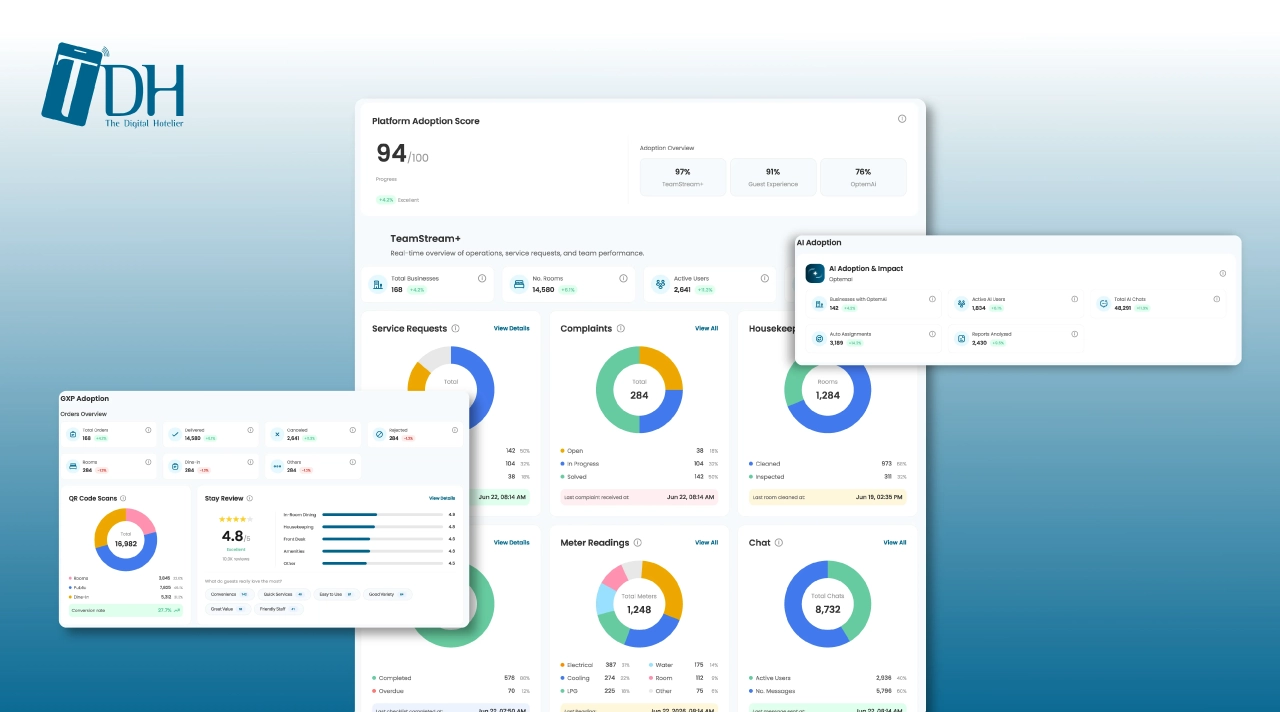
| Real-time visibility | None | Manual updates required | Live |
| Recurring fault detection | Invisible | Possible with manual analysis | Available via OptemAi analysis |
| Audit-ready compliance records | Filing cabinet search | File version chaos | Timestamped, searchable |
| Mobile field execution | Print, then walk | Not designed for it | Native mobile-first |
| Cross-department coordination | Phone, sticky notes, hope | Email back-and-forth | Integrated with operations |
| Asset history queryable | Box of folders | If you maintain it | Native |
| Visual SOP guidance | Printed procedures | Printed sheets | Photos, PDFs, and video files attached to each task |
| Onboarding new engineers | Tribal knowledge | Tribal knowledge + spreadsheets | Training module with assessments |
| Audit report structure | Loose sheets | Single flat file | Grouped by building level, printable, with per-person activity log |
| Scales as assets and team grow | Gets hard to keep reliable | Gets hard to keep reliable | Designed to scale |
| AI-driven pattern analysis | Not available | Manual analysis only | Available via OptemAi |
Within TeamStream+, the master preventive maintenance checklist becomes a live operational program with scheduled tasks, named owners, and digital sign-off.
By using the hotel maintenance software module, managers can define inspection cycles for each asset class to match their property’s needs, while the hotel checklist software module turns each line item from this guide into a trackable, timestamped, and digitally signed task.
Engineers receive their assigned tasks on mobile. Each task closes with one of two outcomes: Completed, meaning the check passed, or Reported, meaning an issue requires follow-up.
When a task is marked Reported, the system immediately prompts the technician to create a service request on the spot, without switching tools.
Each task on mobile can carry attached reference material: a wiring diagram, a procedure PDF, or an instructional video the technician opens while standing in front of the equipment. No printed binders, no desk trips mid-round.
For compliance-critical tasks, checklists can require a second sign-off from a named inspector before the round closes. The system defines which role can inspect, so documentation matches what the task actually demands.
The checklist data does not sit in isolation. Reactive maintenance requests reach the same platform from housekeeping during room operations and from guests through Guest-Journey.
When the same asset generates a scheduled PM task and a reactive report in the same week, the engineering manager sees both. When recurring issues emerge on a specific asset, leadership can identify the pattern and make a capital decision based on data rather than recollection.
OptemAi: Operational Analysis Built Into Your Dashboard
OptemAi is an AI operations agent built into TeamStream+ with live access to the property’s operational data.
Where most reporting tools show you numbers, OptemAi reads those numbers and tells you what they mean.
The analysis surfaces in your dashboard: which departments are generating the most issues, where resolution times are climbing, which assets are recurring problems, and where your team’s capacity is concentrated.
Engineering managers can also query the data directly:
- “Which assets generated the most reactive work orders this quarter?”
- “What’s the average resolution time for HVAC tickets on floors 5 through 9?”
- “Show me checklist tasks with completion rates below 85 percent over the last 90 days.”
OptemAi reads the live data and returns answers in seconds. It doesn’t replace the engineers who know the building or the managers who make decisions. It removes the time spent pulling and formatting reports to reach questions that should take one query.
Frequently Asked Questions
What’s included in a hotel preventive maintenance checklist?
A complete hotel preventive maintenance checklist covers guest rooms, public areas, mechanical and back-of-house systems, fire and life safety, pool and spa, kitchen and F&B equipment, exterior and grounds, and elevators. Each area has its own frequency cycle (daily, weekly, monthly, quarterly, semi-annual, annual) and assigned ownership. Compliance items such as sprinkler inspections and elevator certifications run alongside these cycles, on the intervals your local code and service contracts set.
How often should I update my hotel PM checklist?
Review the checklist at least once a year, ideally after your main compliance inspections are complete. Update task descriptions when equipment is replaced or when pass/fail criteria change. Add any new systems that were not in the original inventory. A hotel PM checklist is a living document, not a one-time build.
Who should be responsible for completing each section of the PM checklist?
Daily and weekly tasks typically fall to the on-duty engineering technician, with a supervisor spot-check. Monthly and quarterly tasks often need specialist or vendor involvement, particularly for HVAC plant. Formal inspection and testing of regulated systems often requires specialist or authorized external support, depending on local requirements. Each task should have one named owner, not a department.
How often should hotel rooms be inspected?
Daily visual inspection during housekeeping turnover, monthly functional inspection of HVAC, plumbing, electrical, and safety systems on a rotating sample of rooms, quarterly deep inspection that includes carpet and upholstery condition and detailed equipment service, and annual comprehensive maintenance cycle covering every fixture, finish, and system in the room. The actual cadence varies with occupancy: high-rotation rooms accumulate wear faster and need more frequent attention than lower-occupancy inventory.
Can a small hotel run a preventive maintenance program without dedicated software?
A small property with limited assets can run a basic PM program on a well-maintained spreadsheet schedule. The limitations appear when the property tries to track completion evidence, flag recurring faults on specific assets, or produce compliance documentation under audit pressure. In the properties we work with, those limits tend to show up as the asset count and staff turnover grow, rather than at a fixed room count. A structured digital platform eases them and scales as the property grows.
What is the difference between a hotel PM checklist and a work order?
A preventive maintenance checklist is a recurring scheduled inspection document. A work order is generated when an issue needs resolution. In TeamStream+, the two connect at the task level: when a technician marks a PM task as Reported, the system immediately prompts them to create a service request on the spot, without switching tools. The PM record and the reactive ticket are linked from the moment the issue is logged.
Take Your Hotel’s Preventive Maintenance Further with TDH
This checklist is just the starting point. TeamStream+ gives your engineering team a single platform to schedule, execute, and document preventive maintenance digitally.
Replace blind sign-offs with timestamped mobile execution, track completion in real-time, and pull audit-ready compliance records in seconds.
Request a demo to see how it works.
Sources Referenced
U.S. Department of Energy, Federal Energy Management Program (FEMP). Operations & Maintenance Best Practices Guide (Release 3.0). energy.gov
J.D. Power. 2025 North America Hotel Guest Satisfaction Index (NAGSI) Study. jdpower.com
National Fire Protection Association. NFPA 25, Standard for the Inspection, Testing, and Maintenance of Water-Based Fire Protection Systems. NFPA 72, National Fire Alarm and Signaling Code. NFPA 96, Standard for Ventilation Control and Fire Protection of Commercial Cooking Operations. NFPA 70B, Standard for Electrical Equipment Maintenance. NFPA 110, Standard for Emergency and Standby Power Systems. NFPA 10, Standard for Portable Fire Extinguishers. nfpa.org
ASHRAE. Standard 62.1 (Ventilation and Acceptable Indoor Air Quality). Standard 188 (Legionellosis: Risk Management for Building Water Systems). ashrae.org
ASME & CEN. ASME A17.1 and EN 81 Safety Codes for Elevators, and national codes based on them.